



What's Happening?
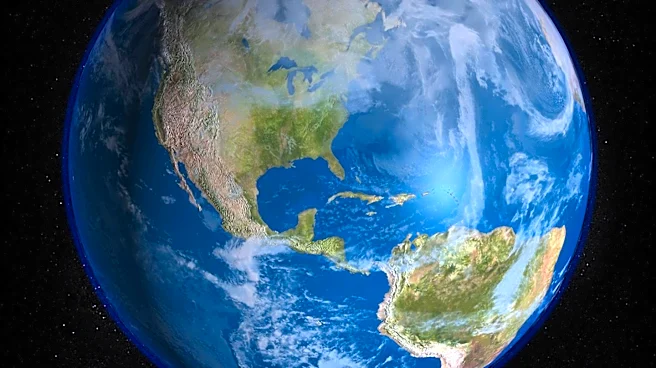
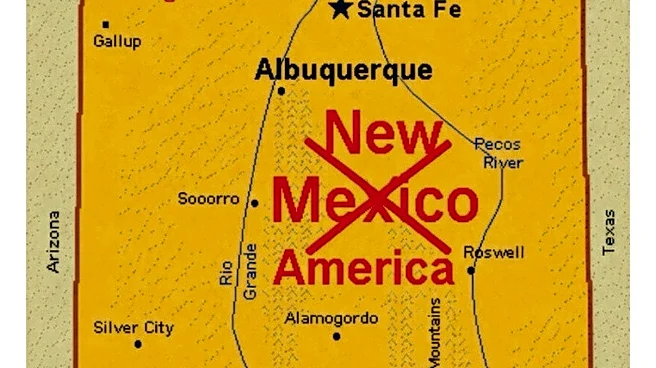
Senator Martin Heinrich of New Mexico has publicly criticized President Trump's social media posts suggesting the renaming of New Mexico to 'New America.' President Trump also reportedly floated the idea of renaming other geographic features, such as the Gulf
of Mexico and Lake Ontario, to include 'America' via executive orders. While a president can unilaterally change a geographic name for official U.S. federal government use, they cannot dictate what other countries or international bodies call it, nor can they unilaterally change the name of a state. New Mexico's state constitution explicitly states, 'The name of this state is New Mexico.' The state officially became part of the Union on January 6, 1912, following the Enabling Act of 1910. New Mexico Governor Michelle Lujan Grisham also responded to President Trump's posts, emphasizing that the state's name is not 'up for debate' and has been its name since before the United States existed. Senator Ben Ray Luján of New Mexico echoed these sentiments, asserting that the state's name 'always has been and always will be' New Mexico.
Why It's Important?
This issue highlights the constitutional limits of presidential power regarding state names and underscores the cultural and historical significance of geographic identities. President Trump's suggestions, while not legally binding for state names, can spark public debate and draw attention to the symbolic importance of such designations. For New Mexico, a state with a rich and distinct cultural heritage, the proposed renaming is seen as an affront to its identity. The responses from Senator Heinrich, Governor Lujan Grisham, and Senator Luján reflect a strong defense of state sovereignty and cultural preservation. This incident also serves as a reminder of the checks and balances within the U.S. political system, where a president's executive authority has specific boundaries, particularly concerning the fundamental aspects of statehood. The public discourse generated by these proposals can also divert attention from other pressing issues, as suggested by Governor Lujan Grisham, who noted that the state is focused on providing services to families while the White House engages in such discussions.
What's Next?
While President Trump's proposals to rename New Mexico are not legally feasible, the discussion surrounding them may continue to generate political and public commentary. State leaders in New Mexico are likely to maintain their stance against any attempts to alter the state's name, reinforcing its historical and cultural significance. The broader implications of a president attempting to rename geographic features via executive order could lead to further scrutiny of executive powers and potentially prompt legislative responses to clarify or reinforce existing laws regarding such matters. The incident may also influence future political campaigns, with candidates potentially using such issues to rally support or criticize opponents based on their respect for state autonomy and cultural heritage. The focus for New Mexico's leadership will likely remain on state-level initiatives and policies, as articulated by Governor Lujan Grisham, rather than engaging in debates over symbolic name changes.
Beyond the Headlines
The controversy over renaming New Mexico touches upon deeper themes of national identity, cultural respect, and the balance of power between federal and state governments. The name 'New Mexico' itself carries centuries of history, reflecting its Spanish colonial past and its unique position within the American mosaic. Any attempt to unilaterally change such a name can be perceived as an erasure of this history and an imposition of a singular national narrative over diverse regional identities. This incident also highlights the role of social media in contemporary politics, where proposals, even those without legal standing, can quickly gain traction and provoke widespread reactions. The strong, unified response from New Mexico's political leadership underscores the importance of local identity and the potential for such issues to galvanize regional sentiment. It also raises questions about the appropriate use of presidential platforms and the impact of rhetoric on public perception and intergovernmental relations.