



What's Happening?
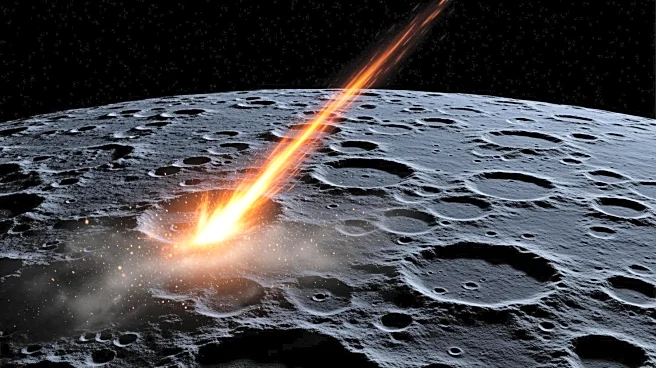
A meteoroid collision with the Moon was recorded by telescopes at the Armagh Observatory and Planetarium in Northern Ireland. The event, which occurred on December 19, 2025, produced a brief, intense flash on the Moon's surface, marking a confirmed impact.
The observation is significant as it was captured in real time by lunar monitoring instruments, adding to the record of verified lunar impact flashes. These flashes help scientists study high-speed collisions on a body with no atmosphere. The impact was caused by a natural meteoroid, and the Lunar Reconnaissance Orbiter is expected to search for the new crater once the region receives sunlight.
Why It's Important?
Tracking lunar impacts is crucial for understanding the frequency and size of space debris that could pose risks to satellites, spacecraft, and future lunar infrastructure. The Moon serves as a natural indicator of meteoroid activity in Earth's orbital space. This information is vital for space agencies planning crewed and robotic missions, such as NASA's Artemis program, to design safer lunar habitats and equipment. The data from these impacts contribute to global models of meteoroid flux, improving our understanding of the debris environment near Earth and the Moon.
What's Next?
Researchers are analyzing the source of the impact, comparing it with known meteor showers to identify the parent comet or asteroid. The Lunar Reconnaissance Orbiter will conduct follow-up observations to locate the fresh crater, allowing comparisons between optical flashes and crater sizes to refine energy estimates. This ongoing research will enhance predictions of long-term erosion and risks to lunar surface structures, informing future exploration and safety measures.