

What's Happening?
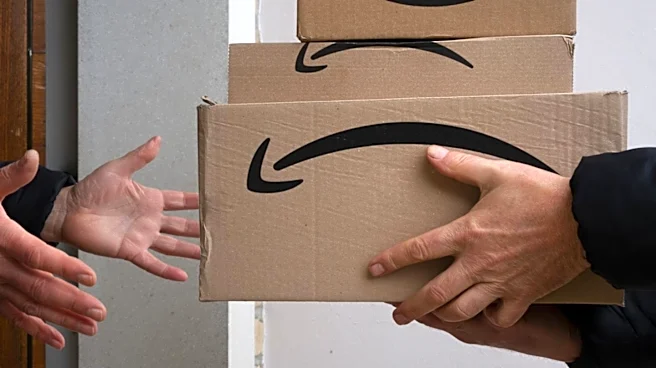
New York City Council Member Tiffany L. Cabán has introduced the Delivery Protection Act (DPA), a proposal aimed at changing the employment structure for Amazon delivery drivers. Currently, Amazon drivers are typically employed by third-party delivery companies,
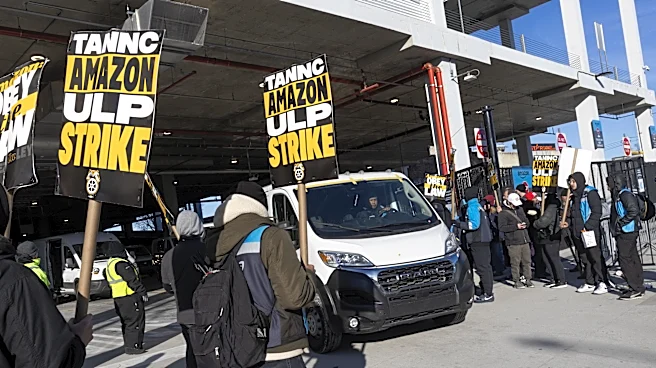
not directly by Amazon. This arrangement often shields Amazon from liability when drivers face injuries or hazardous conditions, which the DPA argues are often created by Amazon's unrealistic delivery quotas. The DPA seeks to make Amazon directly responsible for these drivers by mandating that Amazon become their employer. This would incentivize Amazon to implement better safety regulations. The proposal also stipulates that if Amazon takes over employment, it must hire the drivers previously employed by its smaller third-party delivery companies. However, critics argue that while the DPA protects drivers, it could jeopardize the livelihoods of the small businesses that currently contract with Amazon, many of which are small enterprises generating significant revenue and jobs.
Why It's Important?
The Delivery Protection Act addresses a critical issue of worker safety and corporate accountability within the rapidly expanding e-commerce sector. By attempting to shift employment responsibility to Amazon, the DPA aims to compel a major corporation to internalize the costs and risks associated with its delivery operations, potentially leading to improved working conditions for thousands of drivers. However, the potential negative impact on small businesses, which currently serve as Amazon's third-party delivery partners, is a significant concern. These small enterprises contribute substantially to the economy, and their collapse could lead to job losses and reduced economic diversity. The debate highlights the complex challenge of regulating large tech companies to protect workers without inadvertently harming smaller businesses that operate within their ecosystems. It also raises questions about the broader implications for the gig economy and the definition of employment in the digital age.
What's Next?
The Delivery Protection Act will likely undergo further debate and scrutiny within the New York City Council. Proponents will emphasize driver safety and corporate accountability, while opponents will highlight the potential economic fallout for small businesses. Alternative approaches, such as strengthening existing regulations on working conditions and delivery quotas, or creating a coordinating entity to oversee the delivery industry, may be considered. For instance, the Last-Mile Facility Text Amendment, which aims to limit traffic near warehouses, and the Warehouse Workers Protection Act, which regulates undisclosed quotas, are examples of existing or proposed legislation that could offer different pathways to address driver safety. The outcome of the DPA will set a precedent for how cities regulate large e-commerce platforms and their impact on labor and small businesses.
Beyond the Headlines
The DPA touches upon fundamental questions about corporate responsibility, labor rights, and the future of work in an increasingly digital and outsourced economy. The current model, where large corporations like Amazon leverage third-party contractors, allows them to externalize risks and costs, often at the expense of worker safety and fair labor practices. The DPA's attempt to re-classify drivers as direct employees of Amazon could have far-reaching implications, potentially inspiring similar legislative efforts in other cities and states. This could lead to a broader re-evaluation of the contractor model across various industries. Furthermore, the tension between protecting workers and preserving small businesses underscores the need for nuanced policy solutions that can address the complexities of modern economic structures without creating unintended negative consequences for other stakeholders.