
What's Happening?
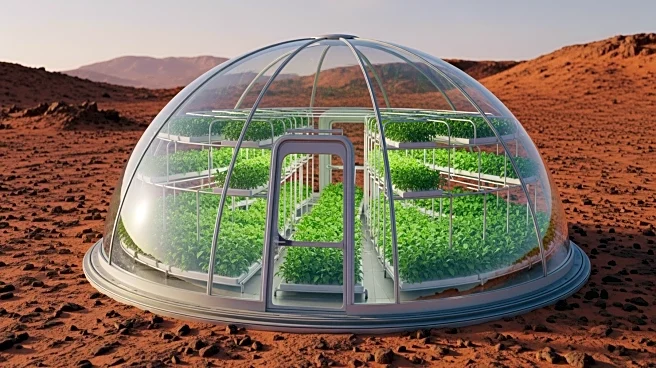
NASA has announced the Mars to Table Challenge, a global competition aimed at developing a sustainable food system for long-duration space missions. This initiative is part of NASA's broader efforts to support
human exploration of Mars and other deep space destinations. The challenge invites chefs, innovators, and scientists to create a comprehensive, Earth-independent food system that can support astronauts on missions lasting months or years. The competition builds on NASA's previous Deep Space Food Challenge and offers a prize of up to $750,000. Participants are tasked with designing a meal plan that is nutritious, sustainable, and independent from Earth, considering factors such as nutritional balance, taste, and integration with NASA's life support systems.
Why It's Important?
The Mars to Table Challenge is crucial for the future of space exploration as it addresses the complex issue of feeding astronauts on long-duration missions. Developing a self-sustaining food system is essential for missions that extend beyond Earth's immediate vicinity, such as those to Mars. This challenge not only aims to solve logistical issues related to space travel but also has potential applications on Earth. Innovations from this challenge could improve food security in remote or resource-limited areas, offering fresh food production solutions in harsh environments. The initiative reflects NASA's commitment to leveraging public engagement to solve complex problems, benefiting both space exploration and terrestrial needs.
What's Next?
The Mars to Table Challenge is open for submissions until July 31, 2026. Participants will need to submit a detailed operations plan and system design layout for their proposed food system. NASA will evaluate these submissions based on criteria such as sustainability, nutritional value, and feasibility for space missions. The challenge is part of NASA's Centennial Challenges program, which has a history of fostering innovation in various fields. As the competition progresses, NASA will likely host webinars and provide additional resources to assist participants. The outcomes of this challenge could influence future space mission planning and contribute to advancements in food technology.