





What's Happening?
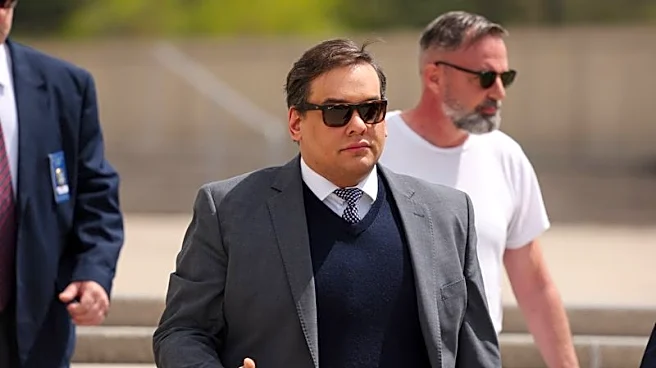
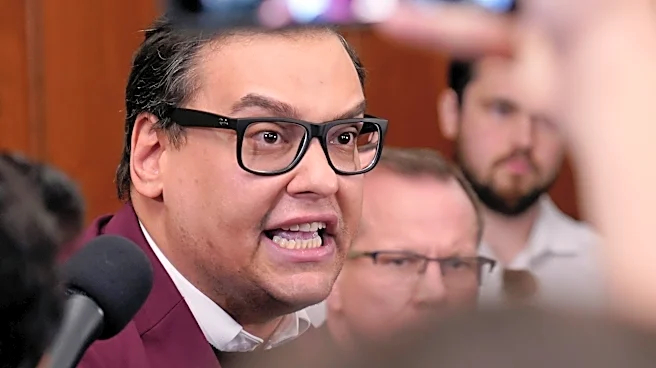
Former Congressman George Santos has been accused of making a violent threat against a journalist following the publication of a story about federal investigations into his trading activities. The journalist reported that Santos, known for his controversial
political career and history of falsehoods, called from a blocked number and expressed anger over the story. The report detailed that the Justice Department and the Commodity Futures Trading Commission are investigating Santos for betting against his appearance at a State of the Union address, despite publicly expressing excitement about attending. Santos allegedly threatened the journalist, saying the story would 'get you a gun in your face,' a claim he later denied, stating he said the story would 'blow up in your face.' Santos has a history of denying statements and attacking the credibility of journalists.
Why It's Important?
The incident highlights ongoing concerns about the safety of journalists and the increasing hostility they face, particularly from public figures. Threats against journalists can undermine press freedom and discourage investigative reporting, which is crucial for holding public figures accountable. The situation also underscores the broader issue of misinformation and the challenges journalists face when reporting on individuals with a history of falsehoods. The federal investigations into Santos' activities could have significant legal implications for him and may affect his public image further. This case also reflects the complex dynamics between media, public figures, and the legal system in the U.S.
What's Next?
As the federal investigations into Santos' trading activities continue, there may be further legal developments. The outcome of these investigations could impact Santos' future endeavors and his ability to engage in public or political activities. Additionally, the journalist involved may pursue legal action or seek protection if the threats are deemed credible. The media and legal communities will likely monitor the situation closely, as it may set precedents for how threats against journalists are handled in the future.
Beyond the Headlines
This incident raises questions about the ethical responsibilities of public figures in their interactions with the media. It also highlights the potential for social media platforms to be used as tools for both misinformation and accountability. The case may prompt discussions about the need for stronger protections for journalists and the role of social media in shaping public discourse.