



What's Happening?
A recent study has revealed a significant geological discovery beneath Yellowstone National Park, suggesting that the volcanic system is powered by a broad, slow-moving flow of hot rock rather than a deep vertical plume as previously believed. This new
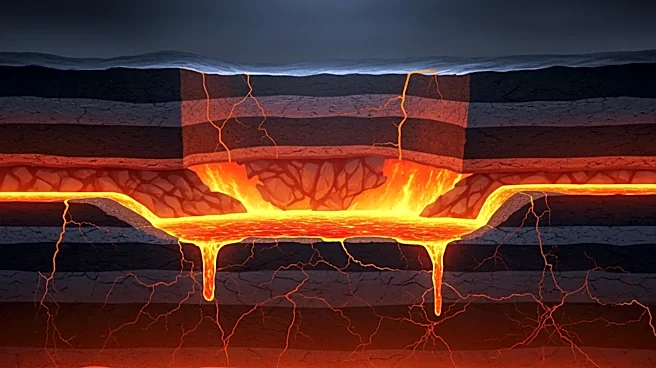
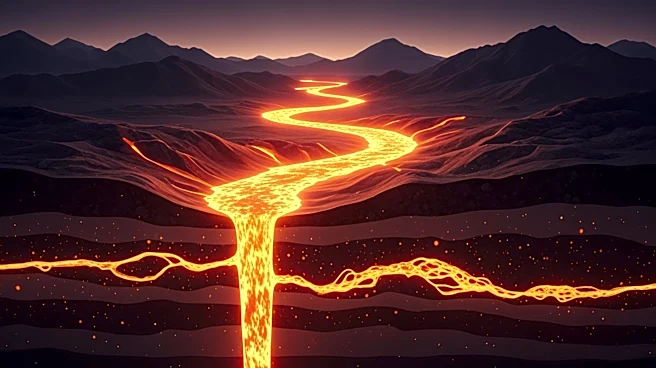
understanding comes from research published in Science, which utilized a detailed 3D model to analyze the region. The study indicates that Yellowstone's magma system is more scattered and constantly evolving, contradicting the traditional view of a single large underground reservoir. The research highlights the presence of an eastward-moving mantle wind linked to the remnants of the Farallon Plate beneath North America. This mantle flow is believed to trigger decompression melting, producing magma without the need for heat from a deep mantle plume. The findings suggest that the magma beneath Yellowstone is mostly stored in a 'magma mush,' a mix of molten and solid rock, rather than a permanent liquid chamber.
Why It's Important?
The discovery of a giant 'river' of hot rock beneath Yellowstone has significant implications for understanding volcanic activity and potential eruption risks. Yellowstone is one of the most closely monitored volcanic systems due to its history of massive eruptions, which have had profound impacts on the environment and human society. The new model challenges long-standing theories about the driving mechanisms of Yellowstone's volcanism, offering a fresh perspective on how magma is generated and stored. This could lead to more accurate predictions of volcanic activity and better preparedness for potential eruptions. The study also underscores the complex tectonic history of western North America and the dynamic processes shaping the region's geology. By providing a different explanation for the origin of Yellowstone's magma, the research may influence future studies and monitoring strategies, potentially affecting public policy and safety measures related to volcanic hazards.
What's Next?
The findings from this study are likely to prompt further research into the geological processes beneath Yellowstone and other similar volcanic systems. Scientists may focus on refining the 3D models and exploring the implications of the mantle wind and decompression melting on volcanic activity. Additionally, the study could lead to a reevaluation of monitoring techniques and risk assessments for Yellowstone and other caldera-forming volcanoes. As researchers continue to investigate the region's tectonic dynamics, there may be increased collaboration between geologists, seismologists, and policymakers to enhance volcanic hazard preparedness and response strategies. The study's insights could also inform educational initiatives aimed at raising public awareness about the complexities of volcanic systems and the importance of scientific research in mitigating natural disaster risks.