







What's Happening?
The U.S. Supreme Court has declined to intervene in a high-profile surrogacy dispute, bringing a temporary close to a legal battle involving McKenna West, a gestational surrogate from Alaska, and Omar Ahmed and Nausheen Gilkar, a California couple. West carried
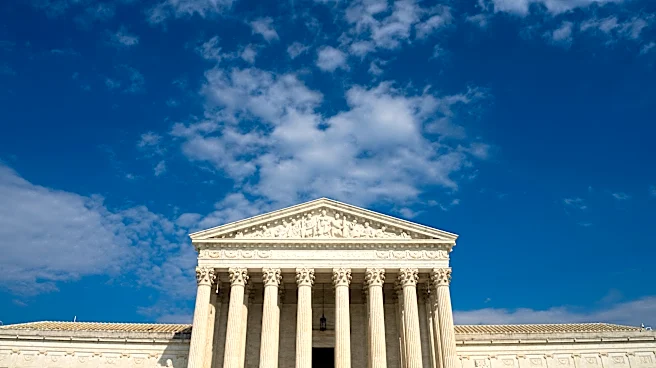
a baby for the couple who was born with a severe heart defect in August. The dispute began when an ultrasound at 20 weeks of pregnancy revealed hypoplastic left heart syndrome, a life-threatening congenital heart condition. The intended parents requested termination of the pregnancy, as per their surrogacy agreement, but West refused. She subsequently moved to Texas, a state with restrictive abortion laws, where she gave birth. California courts affirmed the couple’s legal parentage, and a Texas court reaffirmed that medical decision-making authority rested exclusively with Ahmed and Gilkar. Justice Elena Kagan rejected West’s petition without addressing the underlying merits of the dispute, leaving the state-court rulings in place.
Why It's Important?
This decision by the Supreme Court highlights the complex legal and ethical landscape surrounding gestational surrogacy in the United States. The absence of a single federal law means that regulations vary significantly by state, leading to potential conflicts when parties reside in different jurisdictions with differing legal frameworks. California is known for its supportive surrogacy laws, while other states impose restrictions or grant greater recognition to the birth mother. The case underscores the critical importance of detailed surrogacy agreements, particularly concerning provisions for fetal abnormalities and pregnancy termination. The estimated $5 billion to $9.5 billion annual revenue of the U.S. surrogacy industry, which accounts for 35% to 40% of the global market, indicates the significant societal and economic impact of these arrangements. The ruling reinforces the legal parentage established in California and the medical decision-making authority of the intended parents, providing some clarity in a legally ambiguous area.
What's Next?
While the Supreme Court's decision brings a temporary legal resolution, the child's future remains challenging due to the severe heart condition, requiring multiple complex surgeries. The case will likely continue to fuel discussions among legal scholars, bioethicists, and policymakers regarding the need for more uniform national guidelines or interstate agreements for surrogacy. This incident may prompt a closer examination of existing surrogacy contracts and the legal protections afforded to all parties involved, particularly in cases where medical complications arise. Advocacy groups on both sides of the surrogacy debate may use this case to push for legislative changes at state and federal levels, aiming to either strengthen the rights of gestational carriers or further solidify the legal standing of intended parents. The ongoing medical journey of the child will also keep the human element of this complex legal and ethical issue in the public consciousness.
Beyond the Headlines
This case delves into profound ethical and moral questions at the intersection of reproductive rights, medical ethics, and parental authority. It highlights the emotional and personal toll on all parties involved when a surrogacy arrangement encounters unforeseen medical complications. The differing legal interpretations across states expose a fundamental tension between the biological act of giving birth and the contractual intent of parenthood. The case also implicitly raises questions about the commodification of reproduction within the multi-billion dollar surrogacy industry and the extent to which contracts can or should govern deeply personal and life-altering decisions. The child's severe medical condition adds another layer of complexity, forcing a societal reflection on the responsibilities and rights associated with bringing a vulnerable life into the world through assisted reproductive technologies, and the role of the legal system in navigating these intricate human dramas.