







What's Happening?
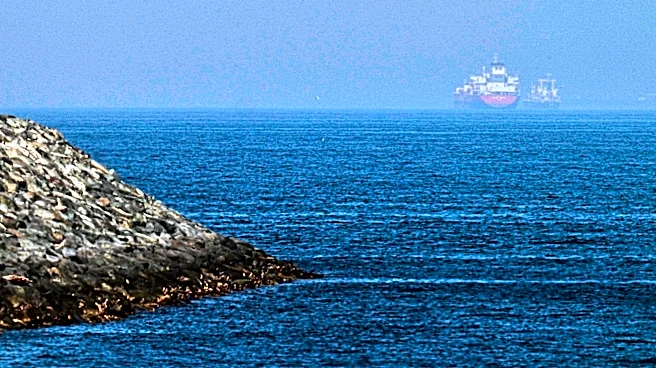
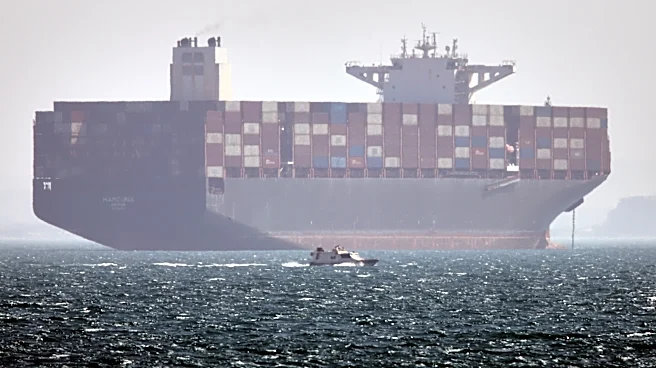
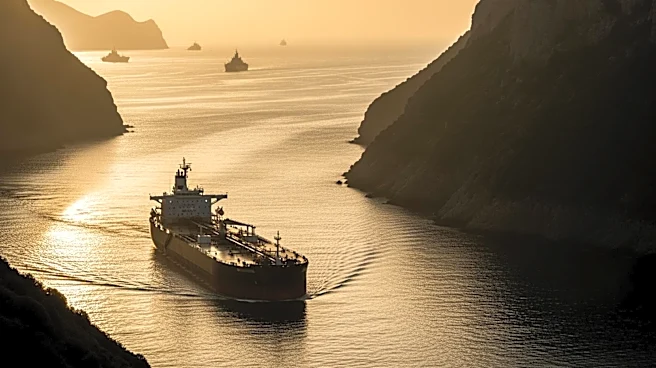
The United States has launched an initiative to assist stranded ships in the Strait of Hormuz, a critical maritime passage that has been heavily influenced by Iranian control. This move is part of a broader strategy to mitigate ongoing economic disruptions
that have persisted beyond the peak of regional conflicts. The effort aims to ensure the safe passage of commercial vessels through this vital corridor, which is crucial for global oil transportation. The situation remains tense as no peace agreement has been reached, leaving the region in a state of uncertainty.
Why It's Important?
The Strait of Hormuz is a strategic chokepoint for the global oil supply, with a significant portion of the world's petroleum passing through it. The U.S. initiative to guide ships is crucial in maintaining the stability of international oil markets and preventing further economic disruptions. This action underscores the geopolitical significance of the region and the potential impact on global energy prices. Stakeholders, including oil companies and shipping industries, stand to benefit from reduced risks of delays and potential conflicts, while regional tensions continue to pose challenges to international trade.
What's Next?
The U.S. will likely continue its efforts to ensure maritime security in the Strait of Hormuz, potentially involving diplomatic engagements with regional powers to de-escalate tensions. The international community may also seek to establish more robust frameworks for maritime safety in the region. Monitoring the situation closely, stakeholders will be keen to see if these efforts lead to a more stable environment for shipping and energy markets.