


What's Happening?
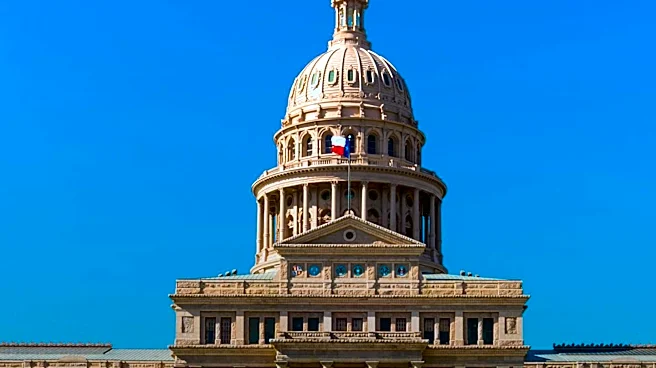
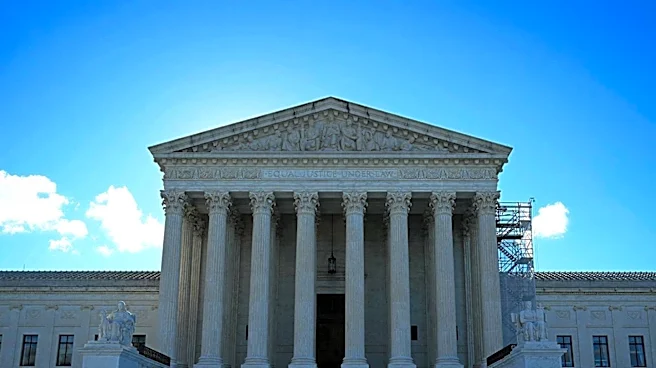
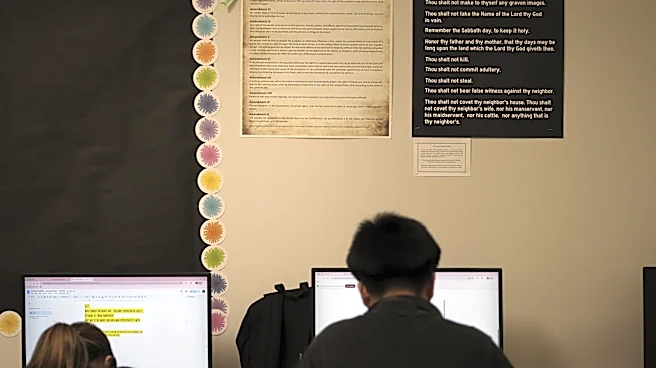
A group of Texas families with children in public schools has petitioned the Supreme Court to review the constitutionality of a 2025 state law, S.B. 10, which mandates the display of the Ten Commandments in every public elementary and secondary school classroom.
The law specifies that the text must be drawn from the King James Bible. This challenge comes after the U.S. Court of Appeals for the 5th Circuit upheld the law, asserting that the Supreme Court's 1980 ruling in Stone v. Graham, which found a similar Kentucky law unconstitutional, was effectively overruled by the 2022 Kennedy v. Bremerton School District decision. The families, representing various religious and nonreligious backgrounds, argue that the 5th Circuit's interpretation "flouted this Court’s binding precedents and gutted the religious-freedom rights of public-school children and parents," and that only the Supreme Court can overturn its own decisions.
Why It's Important?
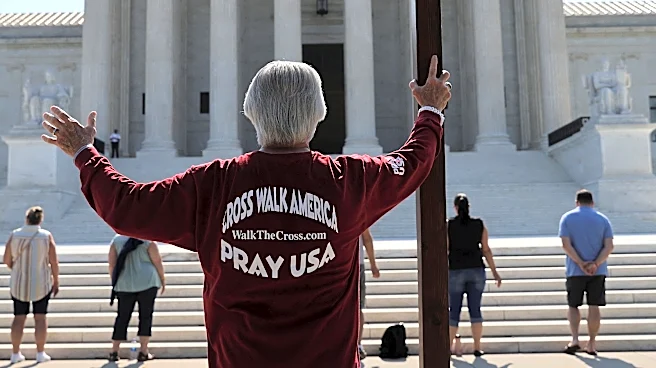
This case is significant as it directly challenges the separation of church and state in public education, a foundational principle of the U.S. Constitution's Establishment Clause. The outcome could redefine the permissible scope of religious displays in public schools nationwide. The 5th Circuit's ruling, which dismissed the precedent set by Stone v. Graham based on its interpretation of Kennedy v. Bremerton School District, highlights a growing legal debate over the application of religious freedom jurisprudence. If the Supreme Court takes up the case, its decision will have far-reaching implications for how religious texts and symbols can be presented in public educational settings, potentially impacting curriculum, school policies, and the rights of students and parents from diverse religious and nonreligious backgrounds across the country. It also underscores the ongoing tension between religious expression and the Establishment Clause.
What's Next?
The Supreme Court will now consider the petition filed by the Texas families. The Court's decision on whether to hear the case will be a critical next step. If the Court grants certiorari, it will schedule oral arguments and ultimately issue a ruling that could either affirm the 5th Circuit's decision, thereby allowing the Ten Commandments display to stand in Texas and potentially other states, or reverse it, reinforcing the prohibition against such displays in public schools. Regardless of whether the Court takes the case, the legal challenge is likely to continue to fuel public discourse and legal battles over religious freedom and the role of religion in public institutions, with potential reactions from various advocacy groups, religious organizations, and educational bodies.
Beyond the Headlines
The underlying tension in this case extends beyond the mere display of a religious text; it delves into the evolving interpretation of the Establishment Clause and the Free Exercise Clause of the First Amendment. The 5th Circuit's assertion that the Kennedy v. Bremerton School District decision effectively "jettisoned" the Lemon test, which previously guided Establishment Clause cases, suggests a shift towards a historical interpretation of religious establishment. This shift could lead to a broader acceptance of religious practices and symbols in public spaces, potentially altering the landscape of religious freedom in the U.S. The case also touches upon the rights of parents to direct their children's religious education, as the challengers argue that the mandatory display interferes with this right. A Supreme Court ruling could either solidify this new interpretive approach or reaffirm previous precedents, shaping the future of church-state relations in American public life.