
What's Happening?
The Justice Department has initiated a criminal investigation into Minnesota officials, including Governor Tim Walz and Minneapolis Mayor Jacob Frey, to assess whether their public statements and actions
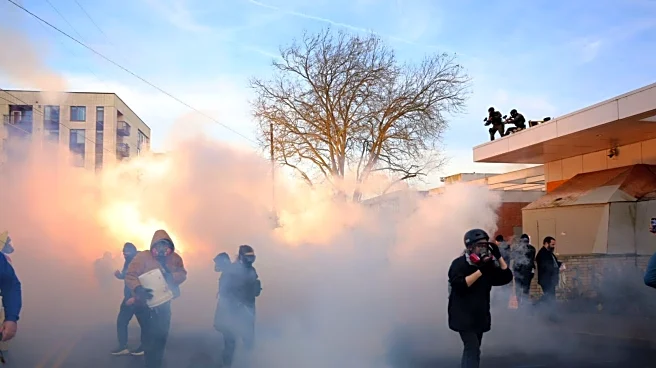
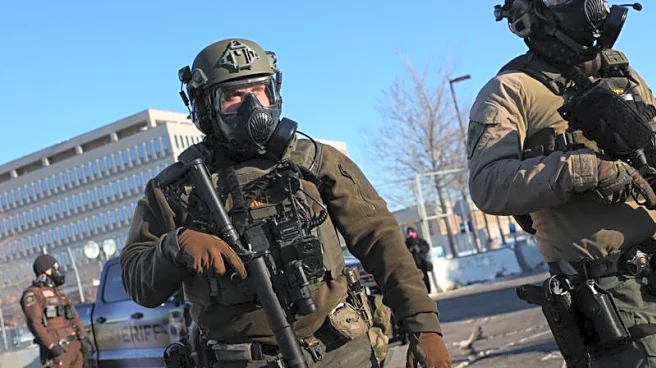
constituted a conspiracy to obstruct federal immigration enforcement. This inquiry follows the fatal shooting of Renee Nicole Good by a federal immigration officer on January 7. The investigation focuses on potential violations of the federal conspiracy statute, 18 U.S.C. § 372, which criminalizes efforts to prevent federal officials from performing their duties through force, intimidation, or threats. The probe was reportedly triggered by public comments from Walz and Frey in response to the deployment of federal immigration officers in Minneapolis. Subpoenas may be issued to both officials, although it is unclear if they have been served. Governor Walz has criticized the investigation as a misuse of the justice system, while Mayor Frey has expressed his determination not to be intimidated.
Why It's Important?
This investigation highlights the ongoing tensions between state and federal authorities over immigration enforcement. The outcome could have significant implications for the balance of power between state and federal governments, particularly in areas of law enforcement and immigration policy. If charges are pursued, it could set a precedent for how public officials' statements are scrutinized in relation to federal law enforcement activities. The investigation also underscores the political and social divisions surrounding immigration policy in the U.S., potentially affecting public safety cooperation and economic stability in Minnesota. The case may influence future interactions between state leaders and federal agencies, impacting local governance and community relations.
What's Next?
The investigation is likely to deepen political polarization in Minnesota and could lead to extended legal battles over the boundaries of protest and public criticism. The Justice Department's next steps will depend on whether they can find evidence of coordination or incitement to obstruct federal duties. The situation may prompt reactions from civil rights groups, political leaders, and the public, potentially leading to protests or calls for policy changes. The legal proceedings could also influence future federal-state relations and the enforcement of immigration laws across the country.