






What's Happening?
Operation COLIBRI ZAFIRO, a 16-day initiative coordinated by the World Customs Organization (WCO), resulted in a significant cocaine seizure in Tocantins, Brazil. Brazilian authorities, specifically the FICCO/TO task force, recovered approximately 490
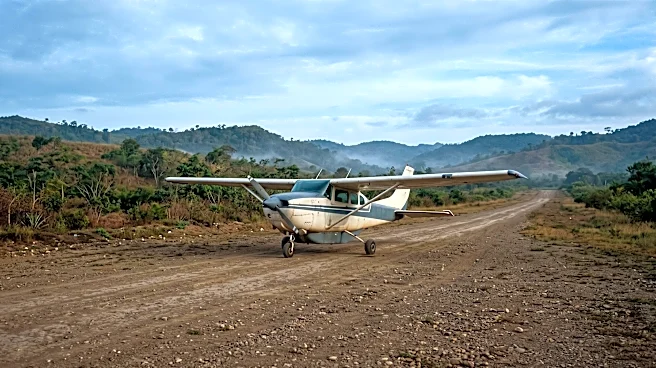
kilograms (1,080 lb) of cocaine near a clandestine airstrip in rural Pindorama do Tocantins in June. This seizure was the largest individually detailed drug find within the operation, accounting for about 40% of the total 1.2 tonnes of narcotics seized across Latin America, the Caribbean, and West and Central Africa. Officers also found an aircraft with structural modifications and arrested two men on charges including drug trafficking and organized-crime membership. The operation involved 19 countries and focused on private aviation, logging 1,938 operational events on the WCO Geoportal, an intelligence platform. WCO Secretary General Ian Saunders credited the network of analysts and field officers, emphasizing that intelligence sharing is crucial for disrupting criminal networks exploiting general aviation.
Why It's Important?
Operation COLIBRI ZAFIRO highlights the critical role of international cooperation and intelligence sharing in combating transnational organized crime, particularly drug trafficking via private aviation. The significant seizure in Tocantins, Brazil, underscores the vulnerability of remote areas and the sophisticated methods used by criminal networks. For the U.S., this operation is important as it disrupts drug supply chains that often target North American markets. By strengthening customs enforcement and intelligence capabilities in Latin America and the Caribbean, the WCO and its partners are directly impacting the flow of illicit drugs, which can reduce drug-related crime and public health issues in the U.S. The focus on private aviation also reveals a key method used by traffickers, prompting a need for enhanced surveillance and interdiction strategies in this sector.
What's Next?
The WCO's emphasis on capacity building and intelligence sharing suggests that future operations will continue to leverage these strategies. The project's intelligence platform, the WCO Geoportal, will likely be further developed to enhance real-time information exchange among participating countries. The WCO aims to build long-term capacity rather than relying on single operations, indicating ongoing training and support for customs administrations in affected regions. Investigators will continue to analyze seized assets, such as aircraft and fuel records, to dismantle criminal networks. The identification of specific corridors linking Latin America and the Caribbean to Europe will also inform future targeted enforcement efforts, potentially leading to more coordinated international actions against drug trafficking.
Beyond the Headlines
The operation's success in identifying and disrupting drug trafficking through private aviation sheds light on a less visible but highly effective method used by criminal organizations. This necessitates a re-evaluation of security protocols and surveillance technologies for general aviation globally. The WCO's approach of building capacity and fostering intelligence sharing among nations is a model for addressing other forms of transnational crime, such as arms trafficking and illicit financial flows. The long-term impact extends beyond immediate seizures, aiming to create sustainable enforcement capabilities that deter future criminal activities. This collaborative framework also reinforces the idea that global security challenges require coordinated international responses, moving beyond individual national efforts to create a more robust and interconnected defense against organized crime.