









What's Happening?
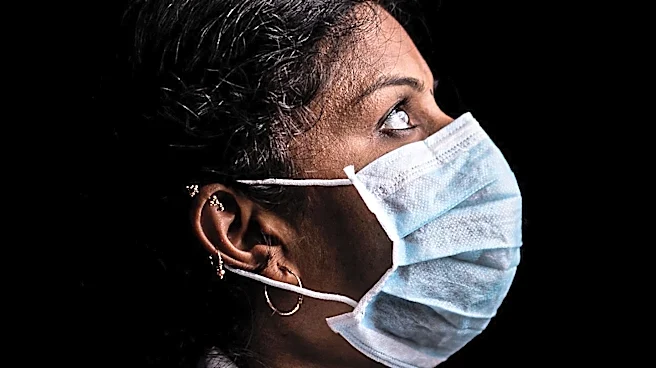
A recent study published in JAMA Network Open has highlighted a significant rise in invasive breast cancer rates among Asian American women, particularly those under 50. The research, led by the University of California San Francisco, indicates that breast cancer incidence
has increased by more than 3% annually across almost every Asian American ethnic group, with Chinese and Vietnamese women experiencing even higher rates. The study analyzed approximately 150,000 cases of invasive breast cancer diagnosed between 2000 and 2022, focusing on nine detailed Asian American, Native Hawaiian, and Pacific Islander (AANHPI) groups. Notably, triple-negative breast cancer, a particularly aggressive form, has been increasing by more than 6% each year among Chinese American women from 2017 to 2022. Researchers suggest that the rise is not linked to screening issues, as it would typically result in more early-stage cancer diagnoses.
Why It's Important?
The findings underscore the need for targeted research and healthcare strategies that address the unique challenges faced by diverse ethnic groups. The rapid increase in breast cancer rates among Asian American women highlights potential disparities in healthcare access and outcomes. Understanding the factors driving this trend is crucial for developing effective prevention and treatment strategies. The study's authors emphasize the importance of culturally appropriate education, screening, and follow-up care to ensure equitable healthcare access. Additionally, the research calls attention to the broader issue of health disparities and the necessity of considering ethnic diversity in medical research and public health initiatives.
What's Next?
Researchers are looking to further studies, such as the CRANE breast cancer study and the ASPIRE cohort study, to provide more insights into potential risk factors contributing to the rise in breast cancer among Asian American women. These studies aim to identify lifestyle, genetic, and environmental factors that may be influencing the increase. Meanwhile, public health officials and healthcare providers are encouraged to enhance outreach and education efforts within these communities to promote early detection and prevention strategies. The study's findings may also prompt policymakers to allocate resources towards addressing health disparities and improving healthcare access for minority groups.
Beyond the Headlines
The study raises important questions about the role of lifestyle and environmental factors in the increasing breast cancer rates among Asian American women. Changes in reproductive patterns, diet, and other lifestyle factors are suspected to contribute to the trend, though the exact causes remain unclear. The research highlights the need for a nuanced understanding of how breast cancer affects different communities and the importance of personalized healthcare approaches. Additionally, the findings may influence future research priorities and funding allocations, emphasizing the need for diversity in clinical trials and health studies.