






What's Happening?
The U.S. Department of Energy (DOE) and the Montana Department of Environmental Quality (MDEQ) have released the final environmental review for the North Plains Connector, a proposed 422-mile-long transmission line. This project aims to establish the first
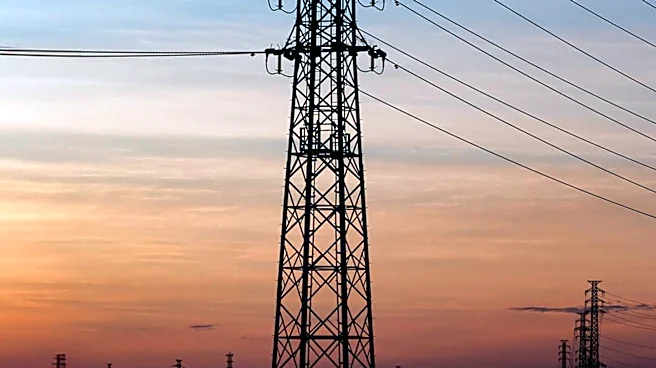
direct connection between the eastern and western U.S. power grids in the region. The high-voltage direct current (HVDC) line is designed to transmit up to 3,000 megawatts of electricity in both directions, connecting Colstrip, Montana, with two endpoints in North Dakota. This will link the Western Electricity Coordinating Council, Midcontinent Independent System Operator, and Southwest Power Pool grid regions. The final environmental impact statement marks the conclusion of the federal and state environmental review process, which commenced in 2024 and included public comments and feedback. The project is estimated to cost around $6 billion, with the DOE committing $700 million from the Infrastructure Investment and Jobs Act (IIJA). A new entity, North Plains Connector LLC, will develop the project, and several utility companies, including NorthWestern Energy, Montana-Dakota Utilities, and Minnkota Power Cooperative, have already committed to capacity on the line.
Why It's Important?
The North Plains Connector is a significant infrastructure project with the potential to profoundly impact the stability and reliability of the U.S. electricity supply. By linking the eastern and western power grids, it is expected to enhance grid resilience, particularly during extreme weather events, and mitigate the risk of widespread power outages. This interconnection will allow for more flexible power distribution, enabling electricity to be moved efficiently between regions as demand fluctuates. This is crucial for managing peak loads and integrating diverse energy sources across a broader geographical area. The project's substantial investment, including $700 million from the Infrastructure Investment and Jobs Act, underscores its strategic importance for national energy security and infrastructure modernization. Utility companies committing to capacity on the line indicate a strong industry belief in its long-term benefits for energy transmission and market efficiency. The project also promises economic benefits, including the creation of approximately 800 construction jobs and tens of millions of dollars in local property tax revenue over its operational lifespan.
What's Next?
Following the completion of the final environmental review, officials anticipate a federal Record of Decision around October. This decision will pave the way for developers to pursue the remaining necessary permits. These permits include a certificate from the Montana Department of Environmental Quality (MDEQ) and a right-of-way grant from the Bureau of Land Management (BLM). Once these approvals are secured, major construction for the North Plains Connector is planned to commence in 2028. The construction phase is projected to last between three and four years, with the transmission line expected to become fully operational by 2032. The successful acquisition of these final permits and the timely execution of the construction schedule will be critical next steps in bringing this ambitious project to fruition, ultimately integrating the U.S. power grids.
Beyond the Headlines
The North Plains Connector project represents a pivotal step towards a more integrated and resilient national energy infrastructure, with implications extending beyond immediate power stability. The ability to move 3,000 megawatts of electricity across vast distances could facilitate the broader adoption and distribution of renewable energy sources, such as wind and solar, which are often generated in remote areas but needed in population centers. This enhanced transmission capacity could reduce curtailment of renewable energy and improve grid efficiency, contributing to national decarbonization goals. Furthermore, the project's design to stabilize electricity during extreme weather events highlights a proactive approach to climate change adaptation, ensuring critical services remain operational amidst increasing climate volatility. The collaboration between federal and state agencies, along with private utility companies, also sets a precedent for large-scale infrastructure development, potentially influencing future inter-regional energy projects and policy frameworks aimed at modernizing the U.S. power grid.