







What's Happening?
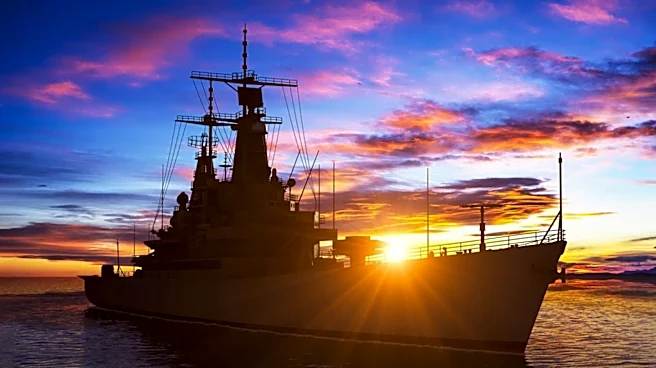
The UK Royal Navy's HMS Prince of Wales is currently engaged in Operation Firecrest, a deployment that underscores the navy's shift towards a 'hybrid' operational force structure. This operation involves the integration of both crewed and uncrewed platforms,
reflecting a strategic move outlined in the UK's 2025 Strategic Defence Review and the 2026 Defence Investment Plan. The carrier strike group (CSG) is operating in the North Atlantic and the High North, demonstrating the UK's commitment to NATO and enhancing regional security. The operation includes the use of F-35B Lightning II joint strike fighters, Merlin Mk2 helicopters, and Malloy T150B UAVs, showcasing the navy's ability to conduct simultaneous operations with diverse aircraft. Commodore Richard Hewitt and Captain Ben Power have highlighted the technological advancements and strategic flexibility offered by this hybrid approach, which is expected to evolve as UAV technology advances.
Why It's Important?
The transition to a hybrid navy is significant for the Royal Navy and its allies, as it enhances operational capabilities and strategic deterrence. By integrating uncrewed platforms, the navy can increase its operational reach and efficiency, potentially reducing risks to personnel. This shift also aligns with broader NATO objectives, reinforcing the alliance's deterrence posture in the North Atlantic and Arctic regions. The hybrid strategy allows for scalable and adaptable force structures, which are crucial in responding to evolving threats. The successful implementation of this strategy could serve as a model for other naval forces, influencing global military practices and defense policies.
What's Next?
As the Royal Navy continues to develop its hybrid capabilities, future operations will likely see increased integration of advanced UAVs and other autonomous systems. The ongoing technological advancements in UAVs will enable more complex and extended missions, further enhancing the navy's operational flexibility. The Royal Navy's commitment to this strategy suggests a long-term investment in hybrid technologies, which could lead to further innovations in naval warfare. Additionally, the outcomes of Operation Firecrest may influence future NATO strategies and collaborations, particularly in the context of Arctic security and deterrence.