



What's Happening?
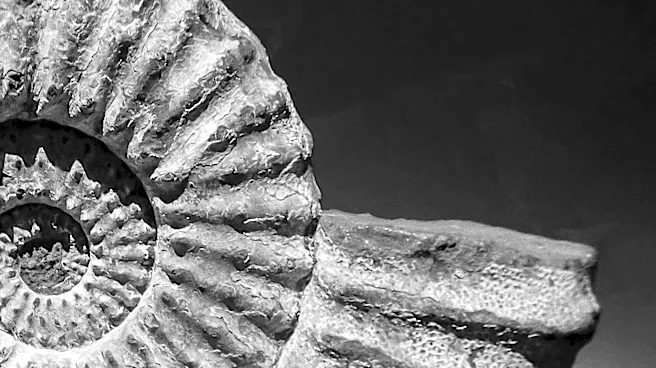
Researchers have identified the earliest known cephalopod fossil, Eoceras shaanxiense, which provides new insights into the evolution of buoyancy control in these marine animals. The fossils, found in 520-million-year-old rocks in South China, are tiny,
with shells measuring just 1 millimeter long. They contain a slender tube, identified as the oldest siphuncle on record, which cephalopods use to control buoyancy. This discovery pushes back the origin of cephalopods by approximately 30 million years, aligning with genetic estimates that place their origin in the early Cambrian period. The study, published in the journal Nature, highlights the significance of early Cambrian biodiversity and the evolutionary advancements that allowed cephalopods to leave the seafloor and become active hunters.
Why It's Important?
This discovery is crucial for understanding the evolutionary history of cephalopods, a group that includes modern octopuses, squids, and cuttlefish. By placing the origin of cephalopods in the early Cambrian, the findings suggest that these creatures were part of the Cambrian explosion, a period of rapid animal diversification that established most modern body plans. This challenges previous assumptions that cephalopods were late arrivals in the evolutionary timeline. The research also opens new avenues for paleontologists to explore early Cambrian rocks for cephalopod ancestors, potentially leading to further discoveries about the early evolution of marine life.