
What's Happening?
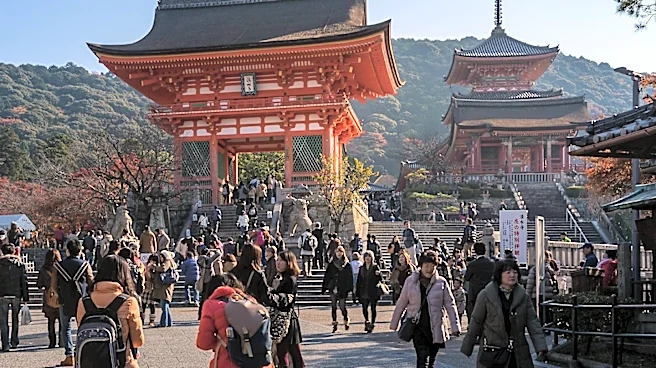
Kyoto's Kiyomizudera Temple, a UNESCO World Heritage Site, has installed SmaGO solar-powered smart trash cans within its grounds. This marks the first time such technology has been deployed within a temple
or shrine in Japan. The initiative addresses the significant waste management challenges posed by overtourism, particularly during peak seasons when the temple can receive 20,000-30,000 visitors daily. These smart trash cans, developed by Japanese company Forcetec, automatically compress waste to about one-fifth of its original volume and allow sanitation workers to remotely monitor their fill status via a cloud network. This system is expected to reduce the frequency of trash collection from four times a day to just once a day. The SmaGO cans also promote recycling with color-coded labels and text in both Japanese and English, and one unit is specifically designed to separate liquids from bottles, funneling beverages directly into a sewage pipe to mitigate odor and leakage.
Why It's Important?
The deployment of SmaGO smart trash cans at Kiyomizudera Temple highlights a growing trend in tourist-heavy regions to leverage technology for sustainable waste management. For the U.S., this development offers a potential model for managing waste in its own national parks, historical sites, and popular urban tourist destinations that grapple with similar issues of high visitor volume and limited infrastructure. The success of these smart bins in reducing collection frequency and improving recycling rates could lead to significant operational cost savings and environmental benefits. Furthermore, the multilingual and user-friendly design of the bins could enhance the visitor experience and promote responsible waste disposal among international tourists in U.S. locations. This approach could also inspire U.S. cities and attractions to explore similar smart city solutions to address the environmental impact of tourism.
What's Next?
The effectiveness of the SmaGO smart trash cans at Kiyomizudera will be closely monitored to assess their long-term impact on waste management and visitor experience. If successful, this model could be expanded to other heavily touristed areas across Japan and potentially influence waste management strategies in other countries, including the U.S. The company Forcetec has already installed these units in 80 locations across Japan, including Tokyo's Akihabara district, indicating a broader rollout. Future developments might include further integration with smart city infrastructure, advanced analytics for waste generation patterns, and potentially even AI-driven sorting mechanisms. U.S. municipalities and tourism boards may observe these outcomes to determine the feasibility and benefits of adopting similar smart waste solutions in their own high-traffic areas.
Beyond the Headlines
Beyond the immediate practical benefits of waste reduction, the installation of smart trash cans in a sacred site like Kiyomizudera reflects a deeper cultural and ethical shift towards integrating modern technology with traditional heritage. It underscores the global challenge of balancing preservation with the demands of mass tourism. For the U.S., this raises questions about how technology can be respectfully and effectively introduced into sensitive historical or natural environments without detracting from their intrinsic value. The initiative also highlights the importance of international collaboration and knowledge sharing in addressing universal environmental challenges. It suggests a future where smart infrastructure plays a crucial role in maintaining the integrity and sustainability of cherished global landmarks, prompting a re-evaluation of how U.S. heritage sites manage their environmental footprint.