
What's Happening?
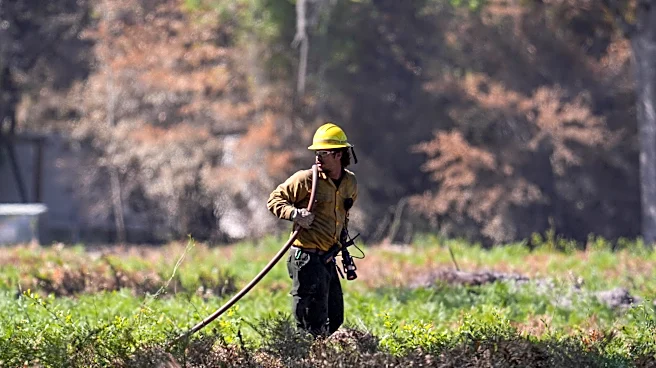
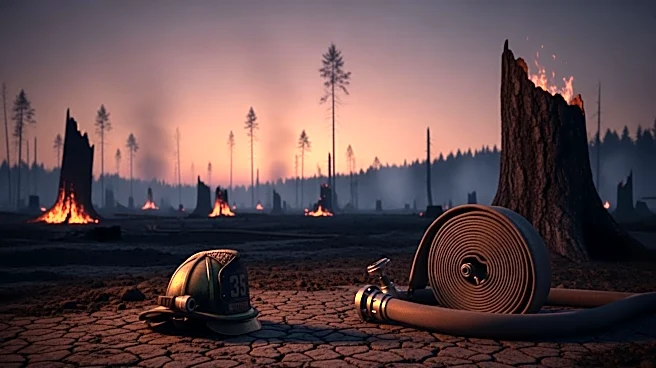
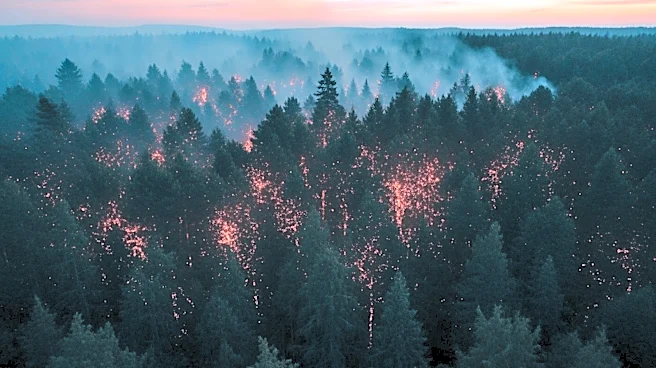
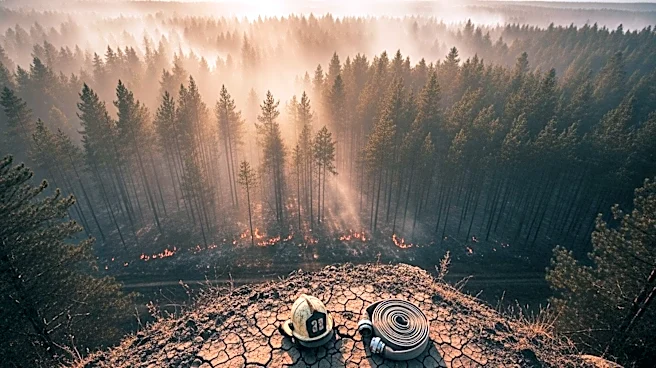
Heavy rain over the weekend has slowed the progress of two major wildfires in southern Georgia, but it has not been sufficient to extinguish them. The Pineland Road fire and the Highway 82 fire have collectively
destroyed more than 100 homes. The Pineland Road fire has burned over 50 square miles and at least 35 homes, while the Highway 82 fire has destroyed at least 87 homes and is only 6% contained. The fires are part of an unusually large number of wildfires in the southeastern United States this spring, exacerbated by extreme drought, gusty winds, and dead vegetation. The Highway 82 fire was reportedly sparked by a foil balloon hitting power lines, while the Pineland Road fire was started by sparks from a welding operation.
Why It's Important?
The ongoing wildfires in Georgia highlight the increasing threat of fire in the southeastern United States, driven by climate conditions such as drought and high winds. The destruction of over 100 homes underscores the severe impact on local communities, with potential long-term economic and social consequences. The fires also pose a significant challenge to firefighting resources, as more than 150 wildfires are currently being battled in Georgia and Florida alone. This situation reflects broader environmental challenges linked to climate change, which could lead to more frequent and intense wildfires in the future.
What's Next?
Firefighting efforts will continue as crews work to contain the blazes. The Georgia Forestry Commission and other agencies are likely to increase their resources and strategies to manage the fires. The situation may prompt discussions on improving fire prevention and response strategies, as well as addressing the underlying environmental factors contributing to the increased fire risk. Local and state authorities may also need to consider long-term recovery plans for affected communities.