



What's Happening?
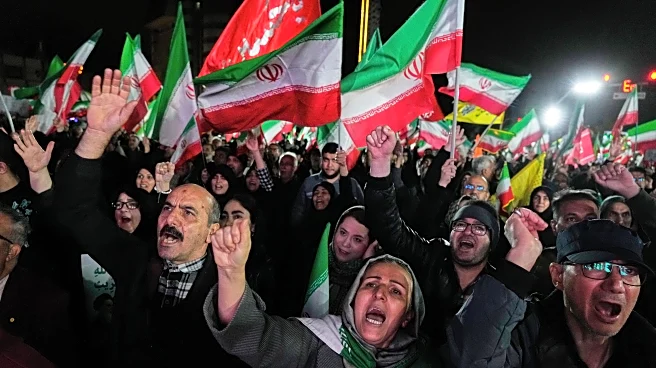
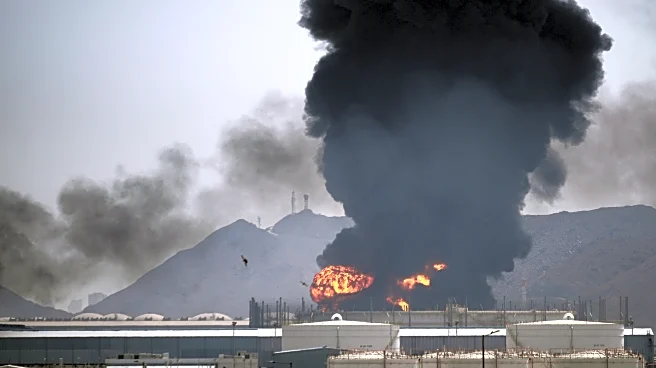
The ongoing U.S.-Israeli conflict with Iran has led to significant disruptions in the global oil supply, particularly affecting the Strait of Hormuz, a critical chokepoint through which approximately 20% of the world's oil supply passes. The conflict has resulted
in attacks on civilian ships and energy infrastructure, causing a halt in traffic through the strait. In response, the U.S. and other countries have released 400 million barrels of oil from strategic reserves, marking the largest release on record, and have temporarily lifted sanctions on some Russian and Iranian oil to mitigate the impact. Despite these efforts, oil industry executives warn that if the strait is not reopened soon, the economic fallout could escalate, with energy prices potentially rising dramatically.
Why It's Important?
The closure of the Strait of Hormuz poses a significant threat to global energy markets and economic stability. The disruption has already led to a divergence between paper and physical oil prices, with physical prices, particularly in Asia, rising sharply. This situation could lead to increased global inflation and slow economic growth if not resolved. The U.S. and European markets have so far been cushioned by strategic oil releases, but these measures are temporary. The conflict's continuation could lead to sustained high energy prices, affecting various sectors, including transportation and manufacturing, and potentially leading to broader economic challenges.
What's Next?
The next few weeks are critical as the U.S. and its allies work to reopen the Strait of Hormuz and stabilize the region. The White House remains optimistic that its military strategy will soon neutralize the Iranian threat, potentially easing price pressures. However, industry leaders emphasize the need for a swift resolution to prevent long-term economic damage. The situation remains fluid, with potential for further escalation or resolution depending on diplomatic and military developments.