







What's Happening?
A new study by MIT researchers reveals that the rapid expansion of data centers for artificial intelligence is causing negative health and air quality impacts, particularly in the Midwest, even though the bulk of electricity demand is concentrated elsewhere.
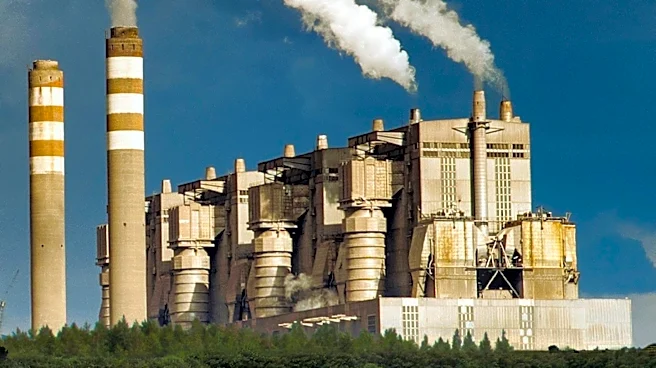
The study estimates that additional air pollution from data center electricity use in 2023 resulted in approximately 650 premature deaths across the United States. While major data center electricity demand is in northern Virginia and Texas, premature mortality rates were highest in Midwestern states like Iowa, Nevada, South Dakota, and Kansas. This mismatch is attributed to the interconnected power grid, where increased demand in one region can trigger older, higher-emission power plants in areas like the Ohio Valley. Atmospheric conditions in the Midwest, including additional ammonia from fertilizer, enhance the formation of fine particulate matter (PM2.5), a pollutant linked to heart attacks, stroke, and lung disease.
Why It's Important?
This study highlights a critical, often overlooked, environmental and public health consequence of the booming data center industry. The finding that air pollution impacts are widespread and disproportionately affect Midwestern states, far from the primary locations of data centers, challenges conventional understanding of environmental justice and industrial siting. The reliance on older, 'dirty' power plants to meet increased electricity demand for data centers means that the benefits of technological advancement come at a cost to air quality and human health in other regions. This issue is particularly significant for rural populations in the Midwest, who are estimated to face a higher mortality risk. The study underscores the need for a more holistic approach to energy policy and data center development, considering the full lifecycle environmental and health impacts across the national power grid.
What's Next?
The MIT researchers emphasize the importance of considering air quality impacts when making decisions about data center siting and operations. They suggest that factors beyond land and energy prices, such as regional air quality, should be integrated into planning. Future research will explore the air quality impacts of onsite generation at data centers and how adaptive adjustments to electricity demand could influence air quality. This study could prompt policymakers and industry leaders to re-evaluate current practices, potentially leading to stricter emission standards for power plants, incentives for cleaner energy sources for data centers, or more strategic geographical distribution of these facilities to mitigate adverse health outcomes, especially in vulnerable regions like the Midwest.
Beyond the Headlines
The study uncovers a hidden dimension of the digital economy's environmental footprint, revealing how the pursuit of advanced technology, such as artificial intelligence, can have unintended and geographically distant consequences. The 'pollution mismatch' illustrates the complex interplay between energy infrastructure, atmospheric chemistry, and public health, where emissions from one region are transported to and amplified in another. This raises ethical questions about who bears the burden of technological progress and the need for equitable distribution of environmental costs. It also highlights the limitations of localized environmental assessments and the necessity for a national, interconnected perspective on pollution and its health impacts, urging a shift towards more sustainable and regionally conscious energy consumption patterns for the tech industry.