
What's Happening?
New research indicates that individual differences in innate immune responses may explain why some people experience more pronounced temporary side effects after COVID-19 vaccination, while others have
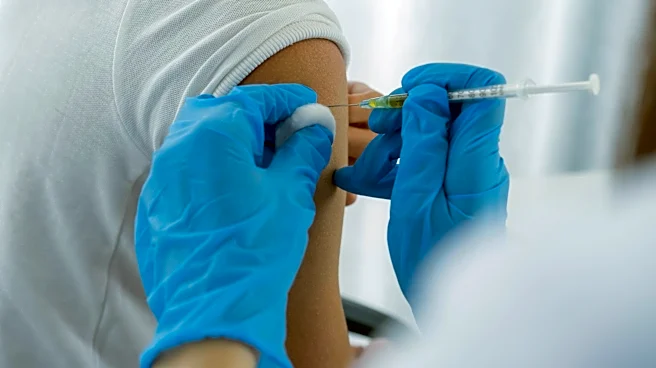
minimal reactions. A study led by Professor Arnaud Didierlaurent at the University of Geneva monitored immune responses in 51 healthy individuals before and after receiving two doses of an mRNA COVID-19 vaccine. The findings suggest that people with a more active interferon-related immune signature prior to vaccination tend to have stronger reactions. Interferons are signaling molecules released by cells upon detecting viral infection, which prime neighboring cells for defense. The study also identified a potential reason for stronger reactions after a second vaccine dose: antibodies and T-cells generated by the first dose can amplify inflammation, leading to the recruitment and activation of innate immune cells at the injection site. These inflammatory molecules may then enter the bloodstream, contributing to systemic symptoms like fever, fatigue, and headache. Professor Didierlaurent emphasized that the severity of side effects does not indicate the vaccine's effectiveness.
Why It's Important?
Understanding the biological mechanisms behind varying vaccine side effects is crucial for public health and vaccine development. For the U.S., this research can help address vaccine hesitancy by providing clearer explanations for post-vaccination symptoms, potentially increasing vaccination rates. It also offers insights for designing future vaccines that are equally effective but better tolerated, which could improve public acceptance and compliance with vaccination campaigns. By identifying specific immune pathways, scientists might develop strategies to mitigate undesirable side effects without compromising the protective immune response. This could lead to more personalized vaccination approaches, especially for vulnerable populations or those with specific immune profiles, ultimately strengthening the nation's defense against infectious diseases and reducing the burden on the healthcare system.
What's Next?
The research team plans to investigate whether the identified immune mechanisms also underpin responses to other types of vaccines. This future work could broaden the understanding of vaccine reactogenicity across various immunization programs. If successful, these findings could lead to the development of new vaccine formulations or co-administered treatments that selectively dampen inflammatory responses while preserving robust immunity. Such advancements could result in vaccines with fewer side effects, potentially increasing public confidence and uptake. Furthermore, the insights gained could inform pre-vaccination screening methods to identify individuals prone to stronger reactions, allowing for tailored advice or interventions. The long-term goal is to create vaccines that are not only highly effective but also universally well-tolerated, optimizing public health outcomes.
Beyond the Headlines
This research delves into the intricate interplay between an individual's baseline immune system and their response to vaccination, highlighting the complexity of human biology. It underscores that vaccine side effects are not random but are rooted in specific biological processes, particularly the innate immune system's initial rapid response. The ethical implications of this research include the potential for developing more equitable vaccine experiences, where individuals are not deterred by severe side effects. Culturally, a deeper understanding of reactogenicity can combat misinformation and foster greater trust in scientific and medical institutions. Long-term, this could pave the way for a new era of precision vaccinology, where vaccines are designed not just for broad efficacy but also for optimal individual tolerability, potentially transforming how public health campaigns are conducted and perceived globally.