









What's Happening?
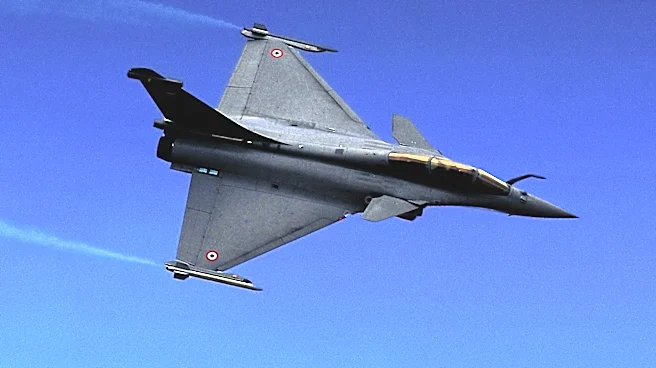
Dassault Aviation and Harmattan Artificial Intelligence (AI) have successfully conducted a test flight of a new electronic warfare (EW) collaborative unmanned aerial vehicle (UAV) designed for the Rafale combat aircraft. The UAV, equipped with the Namib
EW payload, was controlled by a Rafale F4 during the test. This development is part of a strategic partnership between Dassault and Harmattan AI, initiated in January 2026, to integrate advanced autonomous capabilities into next-generation air combat systems. During the flight, the Namib payload discreetly detected and geolocated a radar several kilometers away, transmitting the target's location to the Rafale, which then simulated a strike. The Namib system is capable of detecting, identifying, and geolocating electromagnetic emissions, particularly from air defense systems, and can be carried by various UAVs, including quadcopters and fixed-wing aircraft.
Why It's Important?
The successful test of the Namib EW payload represents a significant advancement in electronic warfare capabilities for the Rafale combat aircraft. By enhancing the Rafale's ability to detect and engage enemy radar systems, this development strengthens France's air defense and offensive capabilities. The integration of advanced autonomous systems into military aircraft is a critical step in modernizing air combat operations, potentially providing a strategic advantage in electronic warfare. This advancement could influence global military strategies and defense procurement, as other nations may seek to develop or acquire similar technologies to maintain competitive parity.
What's Next?
Following the successful test, further development and integration of the Namib EW payload into operational Rafale units are expected. This may involve additional testing and refinement to ensure reliability and effectiveness in various combat scenarios. The strategic partnership between Dassault and Harmattan AI is likely to continue exploring other autonomous capabilities for air combat systems. Additionally, the success of this project could lead to increased interest and investment in similar technologies by other defense contractors and military organizations worldwide.