




What's Happening?
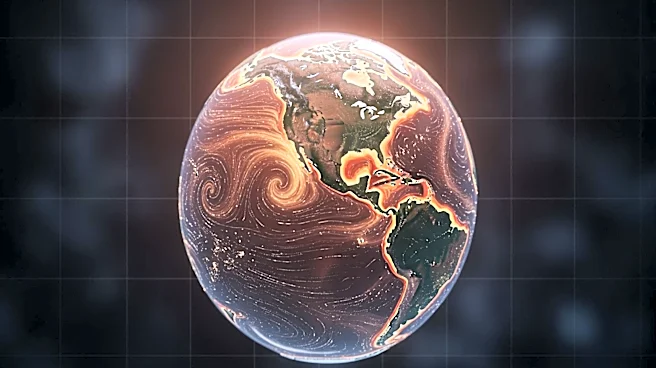
The National Weather Service (NWS) has released maps that provide insights into how the anticipated 2026 El Niño event could affect weather conditions across the United States. El Niño, a phase of the El Niño-Southern Oscillation (ENSO), is a recurring
climate pattern that influences global weather, including temperature and precipitation variations. The Climate Prediction Center has indicated an 82 percent likelihood of El Niño emerging between May and July. The NWS maps illustrate historical temperature and precipitation anomalies during past El Niño events, offering a glimpse into potential weather shifts. These maps are based on climate data from 1981 to 2010 and show how weak, moderate, and strong El Niño events have historically impacted U.S. weather. For instance, during strong El Niño events, warmer-than-average temperatures have been observed across the northern U.S., while wetter conditions have been noted in the southern regions, including California and the Gulf Coast.
Why It's Important?
The emergence of El Niño has significant implications for various sectors in the U.S., including agriculture, energy, and disaster preparedness. The potential for increased flooding in some areas and heightened drought and wildfire risks in others could affect agricultural productivity and water resource management. Additionally, El Niño's influence on the hurricane season could alter the frequency and intensity of storms, impacting coastal communities and infrastructure. Understanding these patterns allows for better preparation and resource allocation to mitigate adverse effects. Stakeholders in agriculture, emergency management, and energy sectors must consider these forecasts to adapt strategies and minimize potential disruptions.
What's Next?
As the likelihood of El Niño's emergence increases, meteorologists and climate scientists will continue to monitor its development and refine forecasts. Government agencies and local authorities may need to prepare for potential weather extremes, such as increased rainfall or drought conditions, depending on regional impacts. Public awareness campaigns and preparedness initiatives could be launched to inform communities about expected weather changes and necessary precautions. Additionally, ongoing research into El Niño's effects will help improve predictive models and response strategies for future climate events.