






What's Happening?
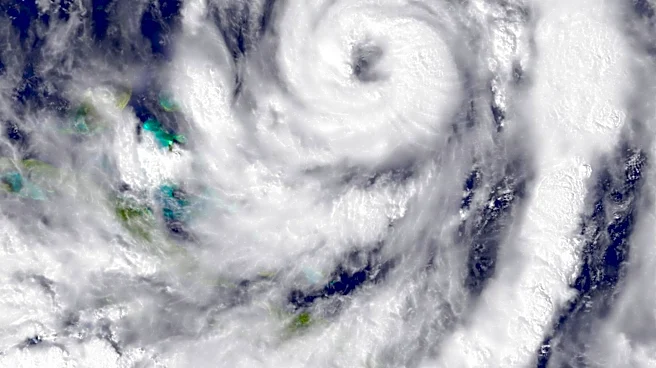
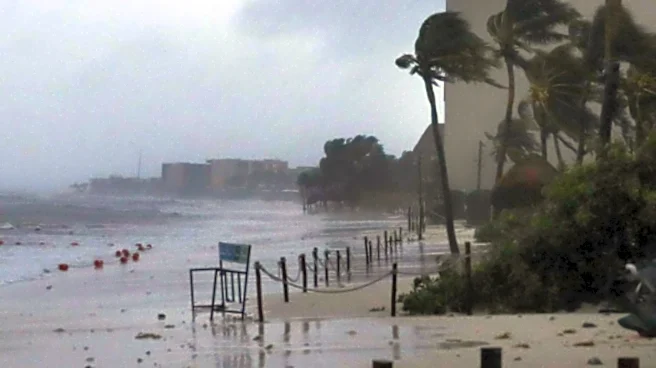
Tropical Storm Bertha has weakened to a tropical depression after moving inland across Texas, leading to the lifting of all coastal watches and warnings. The storm, which initially made landfall in Louisiana, has been affecting parts of the southwestern
Louisiana and Upper Texas coasts with tropical-storm-force winds and coastal flooding. As of the latest advisory from the National Hurricane Center, Bertha was located about 10 miles northeast of Houston, Texas, moving west at 13 mph. The storm's weakening marks the end of its brief tropical run, although swells generated by Bertha will continue to impact the Louisiana and Texas coasts, creating dangerous surf and life-threatening rip current conditions.
Why It's Important?
The weakening of Bertha to a tropical depression reduces the immediate threat of severe weather conditions along the Gulf Coast. However, the storm's impact on coastal areas underscores the vulnerability of these regions to tropical cyclones. The lifting of warnings allows for a focus on recovery and assessment of any damage caused by the storm. The event also serves as a reminder of the importance of preparedness and resilience in the face of natural disasters, particularly as the Atlantic hurricane season progresses.
What's Next?
As Bertha continues to weaken, it is expected to dissipate later tonight. The focus will likely shift to monitoring any remaining rain and potential flooding in affected areas. Local authorities and emergency services will be assessing the situation and coordinating recovery efforts. The experience with Bertha may also prompt discussions on improving infrastructure and emergency response strategies to better handle future storms.