

What's Happening?
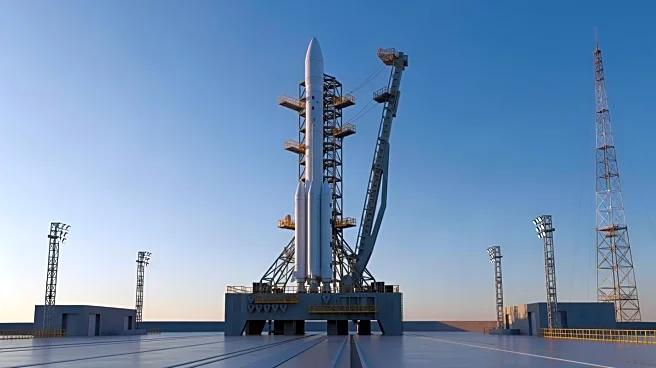
NASA's Artemis II mission, which aims to carry astronauts around the moon for the first time in over 50 years, has been delayed to no earlier than April 2026. The mission has faced multiple postponements due to a combination of hardware issues, weather
disruptions, and safety concerns. Key technical challenges include liquid hydrogen leaks during fueling tests and a failure in the helium flow system, both critical to the Space Launch System's operation. These delays have also affected the timeline for Artemis III, which was initially planned to make history with a moon landing but has now been repurposed as a docking test in low Earth orbit. The delays have sparked public pushback and highlighted the complexities involved in NASA's ambitious deep space plans.
Why It's Important?
The delays in the Artemis II mission underscore the significant technical and logistical challenges NASA faces in its efforts to return humans to the moon. These setbacks have implications for the agency's long-term goals, including establishing a human presence on the moon and eventually sending astronauts to Mars. The postponements also reflect broader issues within NASA, such as reliance on outsourcing and the need for rigorous testing of mission-critical components. The public and political reactions to these delays could impact future funding and support for NASA's space exploration initiatives, as well as the United States' standing in the global space race.
What's Next?
NASA officials have emphasized that delays should be expected given the mission's complexity and scope. The agency continues to work on resolving the technical issues and ensuring the safety of the mission. As NASA addresses these challenges, it remains committed to its long-term vision of lunar exploration and beyond. The outcome of these efforts will be closely watched by stakeholders, including government officials, industry partners, and the public, as they could influence future space exploration policies and priorities.
Beyond the Headlines
The delays in the Artemis II mission highlight the broader challenges of space exploration in the modern era, where technological advancements must be balanced with safety and reliability. The situation also raises questions about the effectiveness of NASA's current operational strategies, particularly its reliance on outsourcing and the integration of components from multiple contractors. These issues could prompt a reevaluation of NASA's approach to mission planning and execution, potentially leading to changes in how future space missions are managed and funded.