



What's Happening?
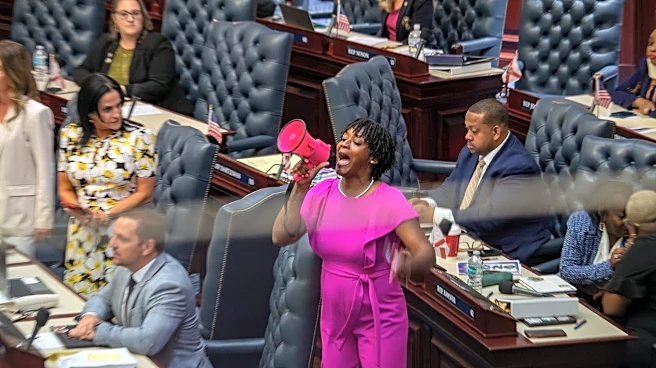
State Representative and Democratic Senate candidate Angie Nixon has publicly condemned what she described as 'harmful rhetoric' from right-wing activist and President Trump ally Laura Loomer. The condemnation follows an incident earlier this week where
Loomer reportedly referred to Nixon as a 'ghetto Black communist b****.' Representative Nixon stated that she was not surprised by the attack, characterizing Loomer as a 'known racist.' This exchange highlights ongoing tensions and the use of inflammatory language in the political discourse, particularly between figures with opposing political ideologies. The incident underscores the challenges faced by public figures in navigating a highly polarized political environment.
Why It's Important?
This incident is important as it reflects the escalating intensity and often personal nature of political rhetoric in the U.S. The use of derogatory and racially charged language by a prominent political activist against an elected official and Senate candidate can have several significant impacts. It contributes to a more hostile political climate, potentially discouraging civic engagement and fostering division. For Representative Nixon, such attacks can divert focus from policy discussions to personal defense, while for Laura Loomer, it reinforces her image among certain segments of her base. More broadly, this type of rhetoric can normalize aggressive language in public discourse, affecting how political debates are conducted and perceived by the general public. It also raises questions about accountability for inflammatory speech in the political arena.
What's Next?
In the aftermath of Laura Loomer's comments, it is likely that Representative Angie Nixon and her campaign will continue to highlight the incident as an example of divisive and harmful political rhetoric, potentially using it to rally support. Political commentators and media outlets will likely analyze the implications of such language on the upcoming elections and the broader political landscape. There may be calls from various groups for greater civility in political discourse, though such incidents often lead to further polarization rather than reconciliation. The event could also prompt discussions within political parties about how to address and respond to personal attacks and racially charged language from opponents and their allies. The incident may also influence voter perceptions of both individuals involved and their respective political movements.
Beyond the Headlines
Beyond the immediate political skirmish, this event touches upon deeper societal issues concerning race, gender, and political identity in the U.S. The specific language used by Laura Loomer, targeting Representative Nixon's race and perceived political ideology, reflects persistent prejudices and stereotypes that continue to surface in public life. It highlights the challenges faced by minority politicians who often contend with not only policy debates but also personal attacks rooted in identity. This incident also raises questions about the role of political allies and the extent to which their rhetoric is implicitly or explicitly endorsed by the figures they support. The broader implication is a continued erosion of respectful dialogue, making it harder to address complex national issues when personal attacks overshadow substantive debate. It underscores the ongoing struggle for a more inclusive and respectful political environment.