







What's Happening?
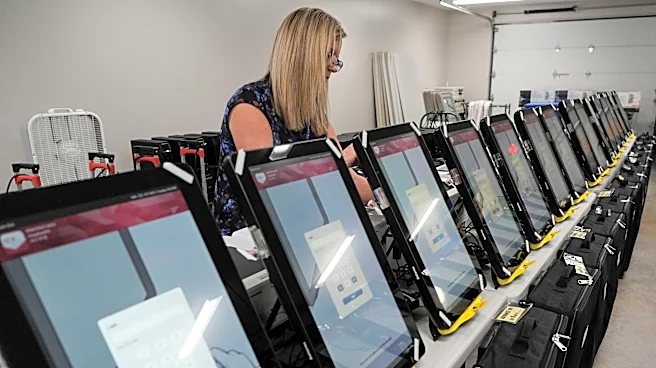
Georgia election officials are under pressure to transition the state's voting system from touchscreen machines to paper ballots within three months. This urgency follows the state Senate's failure to vote on a bill that would have postponed the switch
until 2028. The current system, which uses touchscreen machines to generate QR codes for ballot counting, is set to be phased out by July 1, 2026, as per a decision by GOP state lawmakers. The proposed change to hand-marked ballots has raised concerns among local election officials about potential election security risks, complications in ballot counting, and delays in reporting results. Despite a bipartisan bill passed by the state House to allow a two-year grace period for the transition, the Senate, led by Lt. Gov. Burt Jones, did not bring it to a vote. This leaves election officials with a tight timeline to implement the new system, which includes pre-printing millions of ballots and retraining election workers.
Why It's Important?
The rushed transition to paper ballots in Georgia could have significant implications for election security and the integrity of the voting process. The lack of a grace period and funding for the transition poses challenges in ensuring a smooth and secure election process. The potential for delays in ballot counting and result reporting could lead to confusion and undermine public confidence in the electoral system. This situation is particularly critical as it coincides with upcoming midterm and gubernatorial elections in Georgia. The failure to address these logistical and security concerns could result in chaos similar to the controversies surrounding the 2020 election in Fulton County, which is still under investigation. The outcome of this transition could influence public trust in the electoral process and set a precedent for how election systems are managed in other states.
What's Next?
With the legislative session concluded, leaders from both parties are exploring options to address the challenges posed by the transition deadline. There is potential for a special emergency session to reconsider the delayed deadline or make other modifications to the transition plan. Election officials will need to focus on developing a secure and efficient system for the new paper ballot process, including training staff and implementing protective measures for the pre-printed ballots. The success of these efforts will be crucial in ensuring a fair and transparent election process in Georgia. Stakeholders, including political leaders and election officials, will need to collaborate to mitigate the risks and ensure voter confidence in the upcoming elections.