



What's Happening?
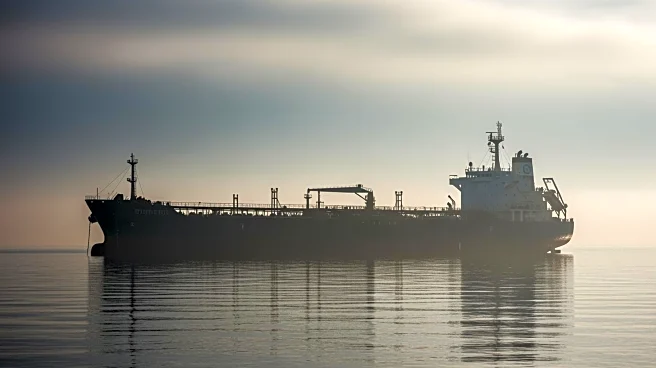
Iranian authorities have seized a vessel accused of smuggling diesel fuel as part of an ongoing crackdown on fuel smuggling operations in the region. The vessel, intercepted in the Gulf of Oman, was found to be operating without valid maritime travel
documents or a cargo manifest for its shipment of six million liters of diesel fuel. The ship's navigation and auxiliary systems were reportedly turned off to conceal its activities. The crew, consisting of 18 members from India, Sri Lanka, and Bangladesh, is being held and faces smuggling charges. This seizure follows a similar incident earlier in the month where Iran seized a tanker allegedly registered in Swaziland, which was found to be smuggling 350,000 liters of fuel. Iranian officials have emphasized their commitment to countering smuggling activities, deploying increased monitoring and intelligence efforts.
Why It's Important?
The seizure of the stateless tanker highlights Iran's intensified efforts to combat fuel smuggling, which it views as a threat to its economy. This crackdown is significant as it underscores the broader geopolitical tensions in the region, where fuel smuggling is a persistent issue. The actions taken by Iran could impact international maritime operations and fuel trade routes, potentially affecting global energy markets. The involvement of multinational crews also points to the complex international dimensions of smuggling networks. For Iran, these efforts are crucial in maintaining economic stability and asserting control over its territorial waters.
What's Next?
Iran is likely to continue its aggressive stance against fuel smuggling, with further seizures and legal actions expected. The international community, particularly countries with nationals involved in these incidents, may respond diplomatically or through legal channels. The ongoing crackdown could lead to increased tensions in the region, affecting maritime security and international shipping routes. Stakeholders in the global energy market will be closely monitoring these developments, as they could influence fuel supply dynamics and pricing.