


What's Happening?
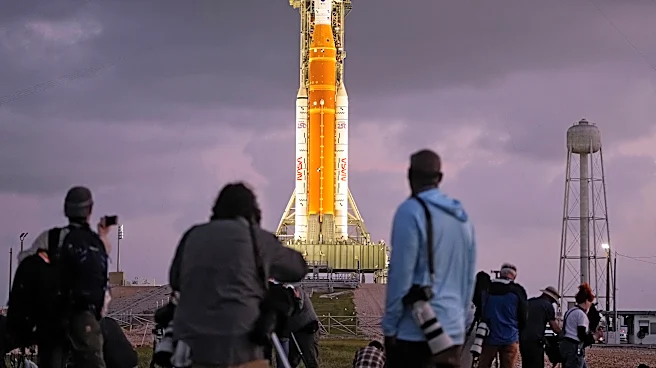
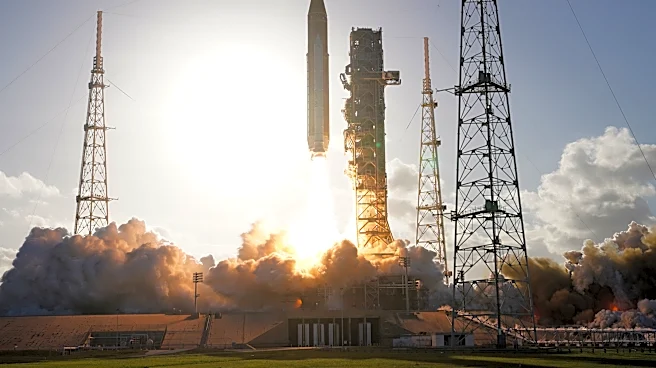
NASA's Artemis II mission is on the verge of launching its crew of four astronauts on a historic journey around the Moon. The crew, consisting of Reid Wiseman, Victor Glover, Christina Koch, and Jeremy Hansen, is set to embark on the first crewed deep-space
mission in over 50 years. The astronauts are currently sealed inside the Orion spacecraft at Kennedy Space Center, with liftoff scheduled for 6:24 p.m. EDT. The mission aims to take the crew on a free-return trajectory around the Moon, potentially breaking the distance record set by Apollo 13. The launch day has been meticulously planned, involving suit-up procedures, weather briefings, and countdown milestones. The crew is wearing custom-fitted Orion Crew Survival System suits, designed for enhanced safety and comfort. The mission is expected to last approximately 10 days, culminating in a splashdown back on Earth.
Why It's Important?
The Artemis II mission represents a significant milestone in human space exploration, marking NASA's return to crewed deep-space missions. This mission is crucial for testing the capabilities of the Orion spacecraft and the Space Launch System rocket, which are integral to future lunar and Mars missions. Successfully completing this mission could pave the way for more ambitious endeavors, such as establishing a sustainable human presence on the Moon and eventually sending humans to Mars. The mission also holds symbolic importance, as it demonstrates international collaboration in space exploration, with Canadian astronaut Jeremy Hansen participating. The success of Artemis II could inspire renewed interest and investment in space exploration, potentially leading to technological advancements and economic opportunities.
What's Next?
Following the successful launch, the Artemis II mission will proceed with its planned trajectory around the Moon. The mission's progress will be closely monitored by NASA and international partners. If the mission achieves its objectives, it will set the stage for Artemis III, which aims to land astronauts on the lunar surface. The data and experience gained from Artemis II will be invaluable for refining technologies and strategies for future missions. Additionally, the mission's success could influence public and governmental support for NASA's long-term goals, including the Artemis program's vision of sustainable lunar exploration and preparation for human missions to Mars.