



What's Happening?
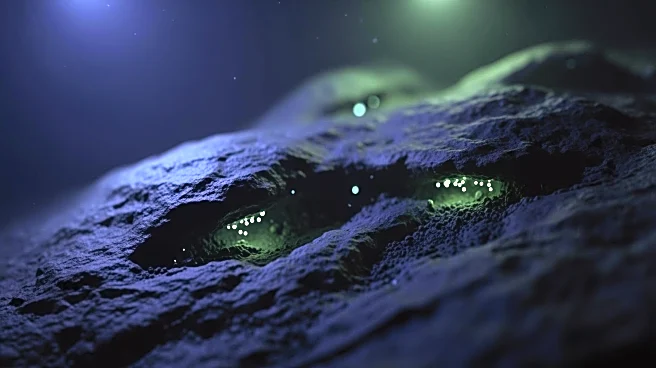
A groundbreaking discovery in Montana has revealed fossilized skin from the Diplodocus, providing new insights into the appearance of this long-extinct dinosaur. Researchers, led by Tess Gallagher from the University of Bristol, found melanosomes in the skin samples,
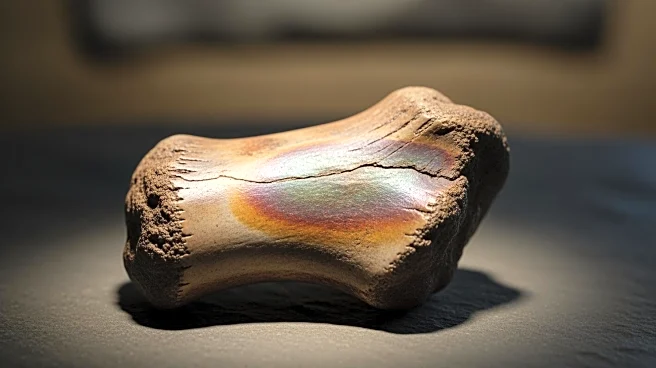
which are organelles responsible for color in animals. This marks the first time such structures have been identified in a sauropod dinosaur. The study, published in Royal Society Open Science, suggests that Diplodocus may have had speckled pigmentation on its scales. The discovery challenges previous assumptions about dinosaur skin, which was often depicted as dull and uniform in color. The well-preserved skin allowed scientists to study the melanosomes in detail, revealing two distinct types: oblong and rod-like. However, the absence of rod-shaped melanosomes in the molds found raises questions about their role. While the findings suggest potential light reflectance, the researchers clarified that iridescence is unlikely for Diplodocus.
Why It's Important?
This discovery is significant as it provides a more complex understanding of dinosaur appearance, challenging long-held perceptions. The presence of melanosomes in Diplodocus skin suggests that dinosaurs may have had more varied and intricate appearances than previously thought. This could lead to a reevaluation of how dinosaurs are depicted in media and educational materials. The findings also open new avenues for research into the pigmentation of other dinosaur species, potentially altering our understanding of their ecology and behavior. By uncovering the pigmentation patterns, scientists can gain insights into the evolutionary adaptations of dinosaurs, such as camouflage or social signaling. This research not only enhances our knowledge of dinosaur biology but also contributes to the broader field of paleontology by demonstrating the potential for discovering new information from well-preserved fossils.
What's Next?
The research team plans to investigate more sauropod fossils to determine if similar pigmentation evidence can be found in other species. This could lead to a broader understanding of dinosaur pigmentation and its variations across different species. The study's findings may prompt further exploration into the evolutionary significance of pigmentation in dinosaurs, including its role in survival and adaptation. As more fossils are examined, scientists hope to piece together a more comprehensive picture of dinosaur appearance and behavior. The ongoing research could also inspire new techniques for studying fossilized remains, potentially leading to additional discoveries in the field of paleontology.
Beyond the Headlines
The discovery of pigmentation in Diplodocus skin has broader implications for understanding the evolutionary biology of dinosaurs. It highlights the complexity of dinosaur skin and suggests that these creatures may have had diverse appearances, challenging the traditional view of dinosaurs as uniformly colored. This finding could influence how dinosaurs are portrayed in popular culture, potentially leading to more accurate and varied representations. Additionally, the study underscores the importance of preserving and studying well-preserved fossils, as they can provide valuable insights into the biology and ecology of ancient species. The research also raises questions about the role of pigmentation in dinosaur behavior and ecology, such as its potential use in camouflage, mating displays, or social interactions.