





What's Happening?
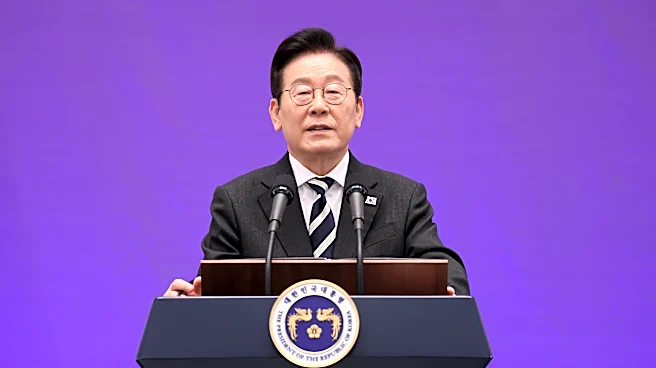
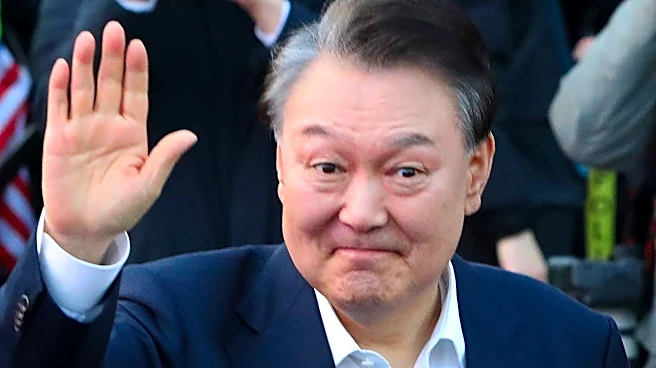
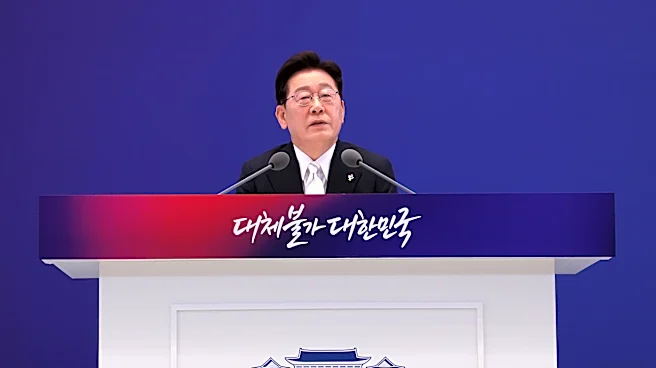
South Korean President Lee Jae-myung has pledged to undertake comprehensive efforts to restore the honor of civilians who were killed due to state violence around the 1950-53 Korean War. Speaking at a joint memorial service for civilian victims held at Seoul
City Hall, President Lee emphasized that it is the state's duty to uncover the truth, identify victims, and redress past wrongs. His message, read by his secretary for social cohesion Jeon Seong-hwan, highlighted the need to shed light on historical truths that were previously suppressed. The pledge includes intensified efforts to excavate the remains of victims, identify them for return to their families, and promptly construct a memorial facility in Daejeon. This initiative follows historical incidents such as the Nogeun-ri massacre in 1950, where U.S. troops fired on South Korean refugees, and the subsequent establishment of the Truth and Reconciliation Commission in 2005 to investigate such cases.
Why It's Important?
President Lee Jae-myung's pledge is a significant step towards historical reconciliation and justice for victims of state violence during a tumultuous period in South Korea's history. By acknowledging the state's responsibility to redress these wrongs, the government is taking a proactive stance in confronting difficult aspects of its past. This initiative is crucial for healing historical wounds and providing closure to the families of victims who have long sought recognition and justice. The commitment to excavate remains, identify victims, and build memorials underscores a national effort to preserve historical memory and ensure that such tragedies are not forgotten. It also reinforces the principle that a state has a moral obligation to its citizens, even for actions taken in times of conflict, and that accountability extends across generations. This move can foster greater trust between the government and its citizens, particularly those affected by historical injustices.
What's Next?
Following President Lee's pledge, the South Korean government is expected to intensify its efforts in several key areas. This includes accelerating the excavation of civilian remains from sites related to wartime state violence and utilizing advanced forensic techniques to identify them. The construction of a memorial facility in Daejeon will likely proceed with greater urgency, serving as a permanent tribute to the victims. Furthermore, the Truth and Reconciliation Commission, or similar bodies, may see renewed support and resources to continue investigating unresolved cases and documenting historical truths. These actions will require coordinated efforts across various government agencies and potentially collaboration with historical and human rights organizations. The government's progress on these commitments will be closely watched by victim advocacy groups and the public, as it represents a long-term commitment to historical justice.
Beyond the Headlines
The commitment to restore the honor of Korean War civilian victims delves into the complex ethical and moral dimensions of state power during conflict. It highlights the enduring impact of wartime atrocities on civilian populations and the generational trauma that can result from unacknowledged historical injustices. This initiative also touches upon the delicate balance between national security imperatives and the protection of civilian lives, a lesson that resonates globally. By actively seeking to uncover truths and build memorials, South Korea is engaging in a process of collective memory-making that can shape national identity and values. It underscores the importance of historical accountability not just for the victims, but for the moral integrity of the nation itself. This effort can serve as a model for other countries grappling with similar legacies of state violence during periods of conflict, demonstrating a path towards reconciliation and human rights affirmation.