




What's Happening?
A recent review published in Applied System Innovation highlights the transformative impact of artificial intelligence (AI) on agriculture. The study outlines how AI is shifting farming from labor-intensive practices to data-driven systems that enhance
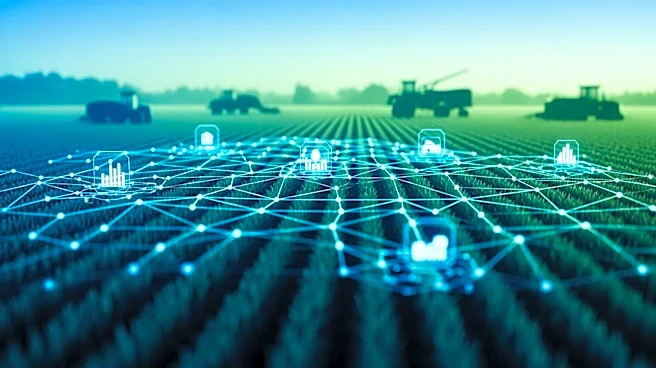
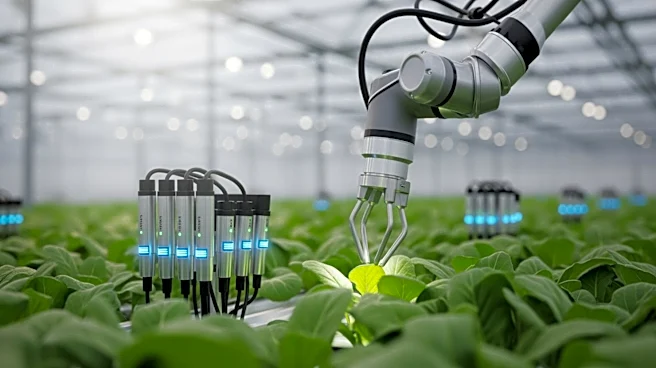
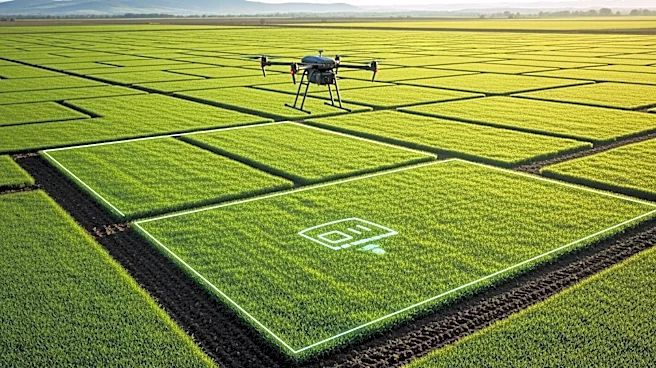
crop monitoring, yield forecasting, and farm machinery operation. AI technologies are being integrated into three stages of smart agriculture: perception, decision making, and execution. These systems utilize sensors, drones, and algorithms to collect and analyze field data, enabling precise management decisions and autonomous field operations. The review emphasizes the role of AI in addressing global food system challenges, such as population growth and climate change, by improving efficiency and sustainability in agriculture.
Why It's Important?
The integration of AI in agriculture is crucial for enhancing productivity and sustainability in the face of increasing global food demands and environmental pressures. By enabling precise monitoring and management of crops, AI can help optimize resource use, reduce waste, and improve yields. This technological shift has the potential to revolutionize traditional farming practices, making them more efficient and less reliant on manual labor. The adoption of AI-driven agriculture could lead to significant economic benefits for farmers and contribute to global food security by ensuring more reliable and sustainable food production systems.
Beyond the Headlines
While AI offers promising advancements in agriculture, the review also highlights challenges such as data quality, model explainability, and the high cost of advanced technologies. These barriers may limit the widespread adoption of AI in farming, particularly for small and medium-sized farms. Additionally, the review raises concerns about data sovereignty and the risk of digital colonialism, where farmers in developing regions may become data suppliers without fair control or benefits. Addressing these issues will be essential for ensuring equitable access to AI technologies and maximizing their potential benefits across diverse agricultural contexts.