







What's Happening?
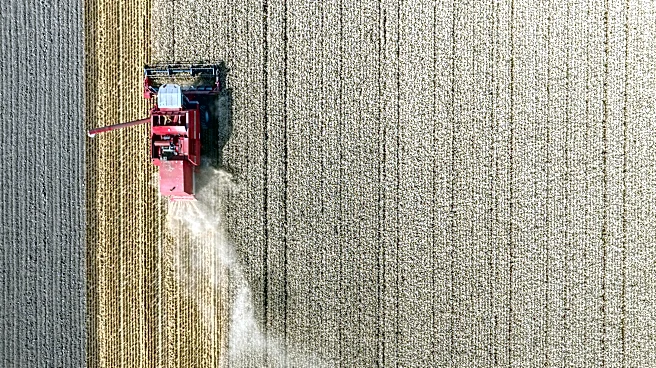
The United States is projected to experience its lowest wheat harvest in 150 years, as reported by the U.S. Department of Agriculture's National Agricultural Statistics Service. The total area of wheat planted in 2026 is estimated at 42.7 million acres,
marking a six percent decrease from the previous year. This decline is attributed to severe drought conditions, high input costs, and uncertainty in export markets. The drought has particularly affected major wheat-producing states like Kansas, Oklahoma, and Texas, where crops have been significantly damaged. Additionally, rising costs for fuel and fertilizers have pressured farmers to reduce their wheat acreage. The National Association of Wheat Growers has highlighted the challenges faced by farmers, including the struggle to maintain profitability amid these conditions.
Why It's Important?
The reduction in wheat harvest has significant implications for the U.S. agricultural sector and food prices. Wheat is a staple crop, contributing to 20 percent of the world's calorific intake. A decrease in wheat production could lead to higher prices for wheat-based products, affecting consumers and food manufacturers. The situation underscores the vulnerability of U.S. agriculture to climate change and economic pressures, potentially leading to shifts in farming practices and crop choices. Farmers may opt for more profitable crops, further reducing wheat acreage. The impact on global markets could also be substantial, as the U.S. competes with other countries that have logistical advantages.
What's Next?
The USDA's forecast suggests that wheat prices may rise, with the season-average farm price projected to increase to $6.50 per bushel. This could lead to higher costs for flour and bakery products if adverse weather conditions persist. Farmers and industry stakeholders may need to adapt by seeking more resilient crop varieties or alternative farming methods. Policymakers might also consider measures to support farmers facing economic and environmental challenges. The long-term sustainability of wheat production in the U.S. will depend on addressing these issues effectively.
Beyond the Headlines
The decline in wheat production highlights broader concerns about climate resilience and agricultural sustainability. As climate change continues to affect weather patterns, the agricultural sector must adapt to ensure food security. This situation also raises questions about the economic viability of traditional farming practices in the face of rising costs and market uncertainties. The need for innovation in agriculture, such as drought-resistant crops and efficient resource management, becomes increasingly critical. Additionally, the economic pressures on farmers could lead to changes in rural economies and communities dependent on agriculture.