


What's Happening?
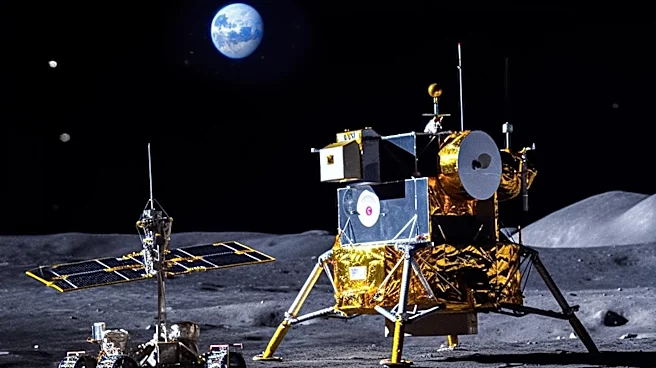
The Mohammed Bin Rashid Space Centre (MBRSC) in Dubai has successfully integrated the RTx ground-penetrating radar transmitter onto the Rashid Rover 2. This development marks a significant step forward for the Emirates Lunar Mission, which aims to send
the rover to the far side of the Moon. The RTx payload will enable the rover to transmit radio signals capable of probing up to 100 meters below the lunar surface, offering scientists unprecedented insights into the Moon's subsurface composition. The Rashid Rover 2 is scheduled to launch aboard Firefly Aerospace's Blue Ghost Mission 2. Once on the lunar surface, the rover will study the Moon's terrain, surface composition, and thermal properties, as well as the interaction of different materials with the lunar environment and plasma activity near the surface. This mission follows the unsuccessful attempt of Rashid Rover 1, which crash-landed in April 2023.
Why It's Important?
This mission holds significant importance for lunar science and future space exploration efforts, including those involving U.S. entities. The RTx payload, a collaboration involving NASA, Brookhaven National Laboratory, Heliospace Corp., and Southwest Research Institute, will provide crucial data to better understand the Moon's meteorite-bombardment history and the presence of iron-titanium minerals in the subsurface. Such information is vital for planning future lunar missions and potentially establishing a Moon Base, a topic MBRSC and NASA are actively discussing. The data collected on the Moon's environment and material interactions will inform the design and safety of future lunar infrastructure and human habitats. For the U.S., this collaboration with the UAE strengthens international partnerships in space exploration and contributes to a broader understanding of the Moon, which is a key objective for NASA's Artemis program.
What's Next?
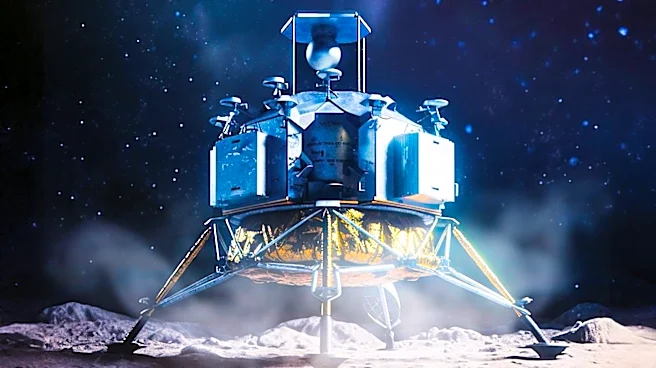
The Rashid Rover 2 is currently undergoing final payload integration and mission-readiness activities in preparation for its launch on Firefly Aerospace's Blue Ghost Mission 2. Upon successful launch and landing, the rover will commence its scientific operations on the lunar surface, studying various aspects of the Moon's geology and environment. The signals transmitted by RTx will be received by the LuSEE-Night radioastronomy spectrometer on the lander, facilitating the collection of subsurface data. MBRSC and NASA are expected to continue their discussions regarding potential future collaborations, particularly concerning the establishment of a Moon Base, which could leverage the insights gained from this mission. The success of Rashid Rover 2 will not only advance the UAE's space ambitions but also contribute valuable data to the global scientific community's understanding of the Moon.
Beyond the Headlines
The Emirates Lunar Mission, with the integration of the RTx payload, represents a broader trend of increasing international collaboration in space exploration. This mission highlights the growing capabilities of nations beyond traditional space powers and the shared scientific goals that transcend national borders. The focus on understanding the Moon's subsurface and its resources has long-term implications for sustainable lunar presence, including potential resource utilization for future missions. The collaboration between MBRSC and U.S. institutions like NASA and Brookhaven National Laboratory underscores the strategic importance of pooling resources and expertise to achieve complex scientific objectives. This mission could pave the way for more integrated international efforts in lunar exploration, potentially accelerating the timeline for human return to the Moon and the establishment of permanent lunar outposts.