
What's Happening?
Georgia Agriculture Commissioner Tyler Harper has announced the release of the Georgia Grown Fall Agritourism Map. This new resource aims to connect residents with nearly 70 agritourism sites across the state,
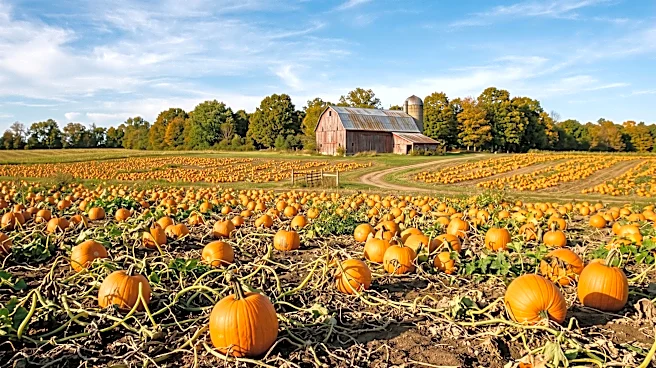
offering a variety of seasonal activities. The map serves as a centralized guide for individuals and families seeking experiences such as pumpkin patches, corn mazes, and U-pick farms. Commissioner Harper emphasized that agritourism provides a unique opportunity for families to engage directly with agriculture, learn about food origins, and build connections with local farming communities. The map itself does not detail each farm's specific offerings but provides links to their websites for more information and driving directions. Featured farms include Rutland Farms in Tifton, Dasher Family Fun Center and Market in Valdosta, A-Maze-N-Corn in Nashville, Calhoun Produce in Ashburn, Mitchell’s Family Farms in Boston, and Long Farms in Bainbridge.
Why It's Important?
The Georgia Grown Fall Agritourism Map is important for several reasons, primarily by bolstering the state's agricultural sector, which Commissioner Harper identifies as Georgia's number one industry. By facilitating direct engagement between consumers and farms, the initiative helps diversify income streams for agricultural businesses, moving beyond traditional crop sales to include experiential offerings. This direct interaction also serves an educational purpose, raising consumer awareness about where their food comes from and the efforts involved in its production. For the public, it offers accessible recreational and educational opportunities, particularly for families looking for seasonal activities. The map supports local economies by driving traffic to rural areas and small businesses, fostering community ties, and potentially inspiring future generations to consider careers in agriculture. This model of agritourism contributes to the sustainability of family farms by providing additional revenue and strengthening their connection to the broader community.
What's Next?
The Georgia Grown Fall Agritourism Map is expected to be a recurring initiative, likely updated annually to reflect seasonal offerings and participating farms. The success of this initial launch will likely influence future expansions, potentially including more farms and a wider array of agritourism activities throughout different seasons. Stakeholders, including farmers, local tourism boards, and state agricultural agencies, will likely monitor visitor engagement and economic impact to refine and improve the program. There may be efforts to further integrate the map with broader state tourism campaigns, promoting Georgia's agricultural heritage as a key attraction. Additionally, the initiative could inspire other states to develop similar resources, recognizing the dual benefits of supporting local agriculture and providing unique experiences for residents and tourists.
Beyond the Headlines
Beyond its immediate benefits, the Georgia Grown Fall Agritourism Map highlights a broader trend in consumer behavior: a growing desire for authentic, experiential connections to food sources and rural life. In an increasingly urbanized society, agritourism offers a vital bridge, allowing individuals to reconnect with the land and understand the complexities of food production. This initiative also underscores the evolving business models within agriculture, where farms are increasingly leveraging their unique environments and products to create value beyond traditional commodity markets. Ethically, it promotes transparency in food systems and can foster a greater appreciation for agricultural labor. Culturally, these experiences help preserve rural traditions and landscapes, ensuring that farming remains a visible and valued part of the state's identity. The long-term shift could see agritourism becoming an even more integral component of sustainable agriculture and regional economic development.