
What's Happening?
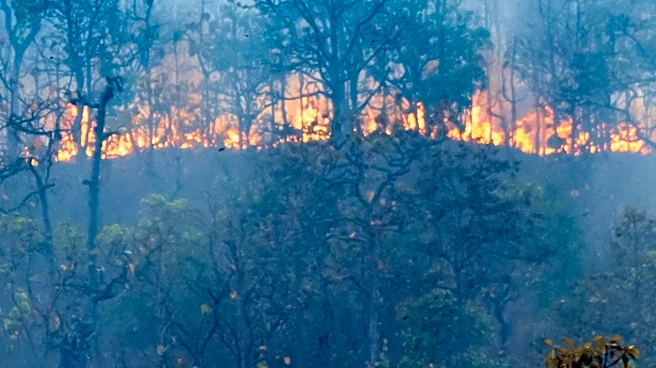
Firefighters are actively responding to a wildfire that ignited near the Santa Fe Ski Basin on Wednesday afternoon. The blaze is located near the Saddleback and Chamisa Trails, specifically along N.M.
475, according to an official social media post from the Santa Fe National Forest. As of the latest reports, there are no immediate threats to people or property in the vicinity. However, smoke from the fire is visibly impacting Santa Fe and its surrounding communities. A helicopter has been deployed to assist ground crews by dropping water on the flames, aiming to contain the fire and prevent its further spread. The exact cause of the fire remains undetermined, although authorities have noted that lightning was detected in the area around the time the fire started, suggesting a potential natural ignition source. The Santa Fe National Forest is leading the response efforts to manage and suppress the wildfire.
Why It's Important?
This wildfire near the Santa Fe Ski Basin carries significant importance for several reasons, primarily concerning environmental impact, public safety, and local tourism. Wildfires in forested areas, especially near popular recreational sites like ski basins, pose a direct threat to natural ecosystems, potentially destroying wildlife habitats and contributing to air quality degradation in nearby communities. The visible smoke in Santa Fe and surrounding areas highlights the immediate public health concern, particularly for individuals with respiratory conditions. Economically, prolonged or severe fires can disrupt tourism, which is a vital industry for the Santa Fe region, impacting local businesses and employment. Furthermore, the undetermined cause, with lightning as a suspected factor, underscores the ongoing challenges of managing natural fire risks in the context of changing climate patterns. The deployment of a helicopter signifies the seriousness of the situation and the commitment of resources to protect both natural assets and human settlements from the fire's potential spread.
What's Next?
Firefighting efforts will continue with the primary objective of containing and fully extinguishing the blaze. Authorities will likely maintain aerial support, including helicopter water drops, as long as necessary to control the fire's perimeter and prevent its expansion. Investigations into the exact cause of the fire will proceed, with a focus on confirming whether lightning was indeed the ignition source. Residents and visitors in Santa Fe and nearby communities should anticipate continued smoke visibility and potential air quality advisories. The Santa Fe National Forest will likely provide regular updates on the fire's status, containment progress, and any potential changes to trail access or public safety recommendations. Depending on the fire's behavior and weather conditions, there could be further resource allocation, including additional ground crews or specialized equipment. The long-term outlook will involve assessing the ecological damage and planning for any necessary restoration efforts in the affected areas.
Beyond the Headlines
The wildfire near the Santa Fe Ski Basin highlights broader issues related to forest management, climate change, and community resilience in the American West. The increasing frequency and intensity of wildfires across the U.S. are often linked to prolonged droughts, higher temperatures, and an accumulation of dry vegetation, all exacerbated by climate change. This incident serves as a stark reminder of the vulnerability of natural landscapes and adjacent communities to these environmental shifts. It also brings to light the critical role of proactive forest management strategies, such as controlled burns and fuel reduction, in mitigating the risk of catastrophic fires. The response to this fire, involving coordinated efforts from various agencies, underscores the importance of inter-agency cooperation and robust emergency preparedness plans. Beyond the immediate threat, such events often spark discussions about sustainable land use, the impact of human activity on natural environments, and the need for long-term adaptation strategies to cope with a changing climate, affecting everything from water resources to biodiversity.