





What's Happening?
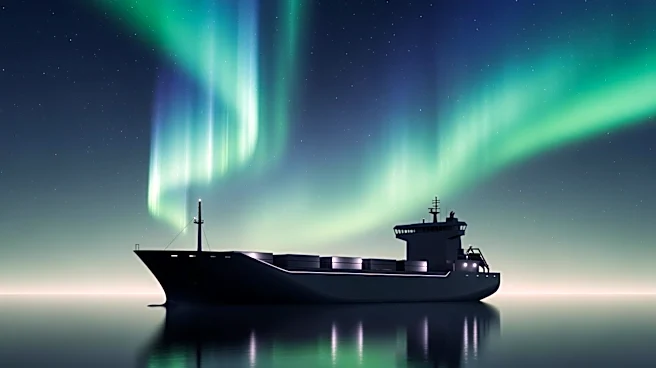
Norway's Northern Lights, a joint venture between Equinor, Shell, and TotalEnergies, is advancing its fleet expansion to enhance its carbon transport and storage capabilities. The initiative, part of Norway's Project Longship, aims to capture and store
CO2 from industrial sites. Northern Lights has recently completed a second charter agreement with MISC Group and K Line, following the delivery of its newest vessel to Bernhard Schulte Shipmanagement. The project, which began operations in 2025, currently has a CO2 transport and storage capacity of 1.5 million tons, with plans to increase this to over 5 million tons annually by 2028. The expansion includes the addition of four new vessels, with two being built by Dalian Shipbuilding in China and two by HD Hyundai Heavy Industries, expected to be operational by 2029.
Why It's Important?
The expansion of Northern Lights' fleet is a significant step in the global effort to reduce carbon emissions and combat climate change. By increasing its capacity to transport and store CO2, Northern Lights is enhancing its role in the carbon capture and storage (CCS) sector, which is crucial for industries aiming to lower their carbon footprint. This development not only supports Norway's environmental goals but also sets a precedent for international collaboration in CCS projects. The involvement of major companies like Equinor, Shell, and TotalEnergies underscores the importance of corporate responsibility in addressing climate issues. The expansion could also stimulate economic growth by creating jobs in shipbuilding and related industries.
What's Next?
Northern Lights plans to continue its fleet expansion, with the new vessels expected to begin delivery in the latter half of 2028. The project will likely attract more industrial partners seeking to reduce their carbon emissions, potentially leading to further contracts and collaborations. As the fleet grows, Northern Lights may explore additional routes and storage sites, enhancing its capacity to serve a broader range of industries across Europe. The success of this expansion could encourage other regions to adopt similar CCS initiatives, contributing to global efforts to mitigate climate change.
Beyond the Headlines
The expansion of Northern Lights' fleet highlights the growing importance of carbon capture and storage as a viable solution to climate change. This initiative not only addresses environmental concerns but also raises questions about the economic and regulatory frameworks needed to support large-scale CCS projects. As more countries and companies invest in CCS, there will be increased scrutiny on the environmental impact of these technologies and their long-term sustainability. The project also emphasizes the need for international cooperation in tackling global environmental challenges, as it involves multiple countries and industries working together towards a common goal.