

What's Happening?
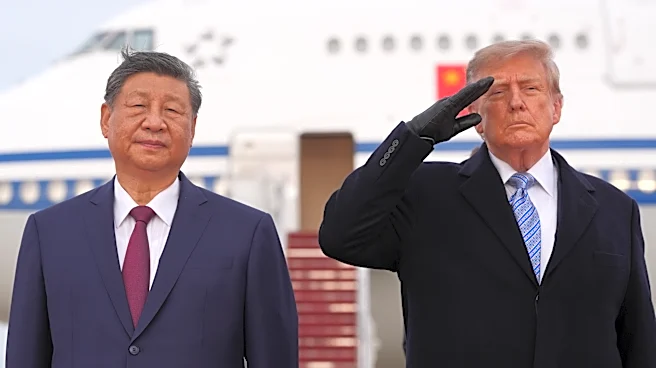
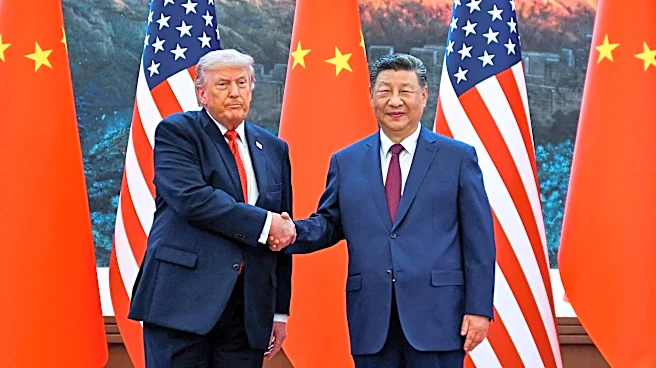
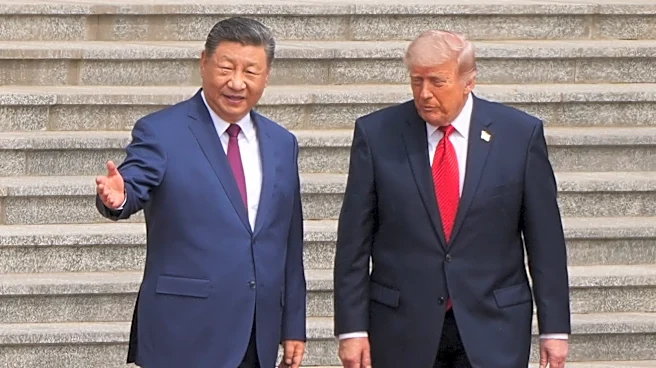
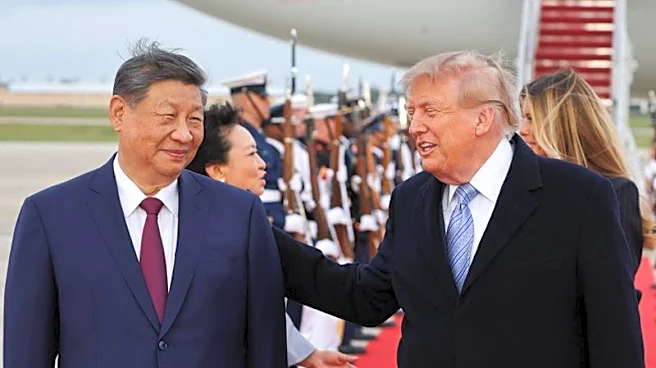
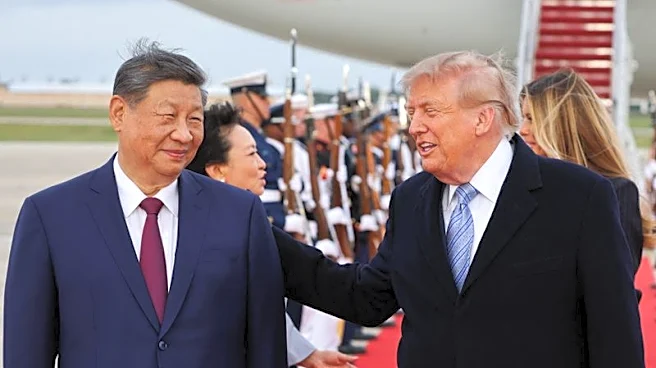
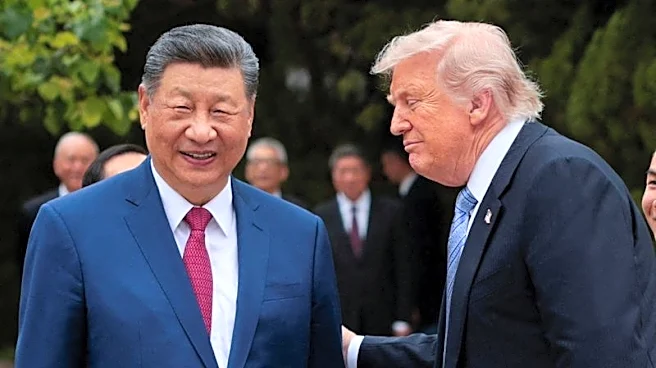
Representative Gregory W. Meeks, the Ranking Member of the House Foreign Affairs Committee, has issued a statement ahead of the upcoming summit between President Trump and People’s Republic of China (PRC) President Xi Jinping. Meeks emphasized the critical
need for President Trump to advocate for human rights and U.S. allies during the discussions. He stressed that managing competition with Beijing should not come at the expense of silence on human rights or the neglect of allies. Meeks specifically called for the release of wrongfully detained U.S. citizens and other political prisoners in China, including journalists like Jimmy Lai and Dong Yuyu, and activist Zhang Zhan. He also urged President Trump to uphold long-standing U.S. policy on Taiwan and to address Beijing’s military aggression in the Taiwan Strait, East China Sea, and South China Sea, as well as its economic coercion against Indo-Pacific allies.
Why It's Important?
This statement from Representative Meeks underscores the bipartisan concern within the U.S. Congress regarding China's human rights record and its assertive foreign policy. It highlights the ongoing challenge for the U.S. in balancing economic interests and strategic competition with its commitment to democratic values and human rights. The call for President Trump to address these issues directly at the summit reflects a desire to maintain a consistent U.S. stance on international norms and to reassure allies in the Indo-Pacific region. Failure to address these concerns could be perceived as a weakening of U.S. resolve and could embolden China further, potentially impacting regional stability and the global human rights landscape. The summit's outcome will be closely watched for indications of the U.S. approach to these complex and sensitive issues.
What's Next?
The upcoming summit between President Trump and President Xi Jinping will be a key event to observe how these concerns are addressed. Representative Meeks's statement sets an expectation for President Trump to raise issues of human rights, the release of political prisoners, and the protection of U.S. allies. The discussions will likely cover a range of topics, including trade, national security, and regional stability. The international community, particularly U.S. allies in the Indo-Pacific, will be closely monitoring the summit's outcomes for signals regarding U.S. policy towards China. The effectiveness of Meeks's call will be measured by the extent to which these issues are publicly acknowledged and addressed during and after the summit, and whether any concrete actions or commitments emerge from the discussions.
Beyond the Headlines
Beyond the immediate diplomatic exchanges, Representative Meeks's intervention highlights the broader ideological struggle between democratic values and authoritarian governance on the global stage. The emphasis on human rights and the protection of allies speaks to the foundational principles of U.S. foreign policy, which are often tested in interactions with powerful non-democratic states. This situation also brings to light the intricate web of economic interdependence and geopolitical competition that defines the U.S.-China relationship. The long-term implications could include a re-evaluation of engagement strategies with China, a strengthening of alliances in the Indo-Pacific, and a renewed focus on promoting human rights globally. The summit's discussions, and the U.S. stance taken, could shape international norms and influence the trajectory of global power dynamics for years to come.