





What's Happening?
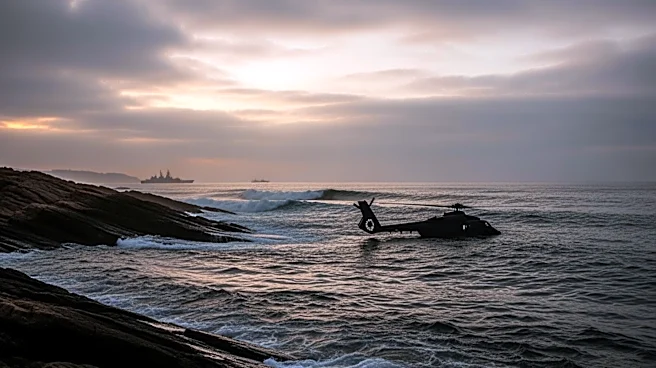
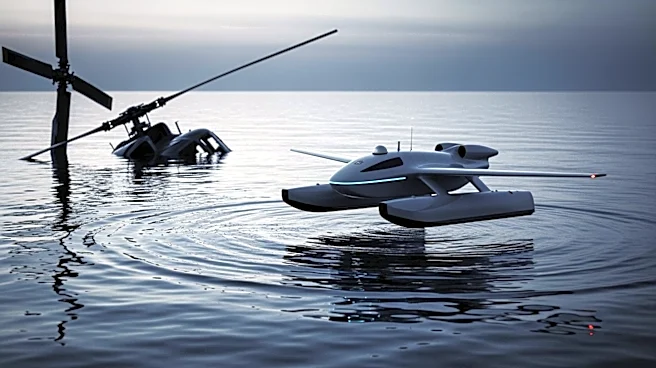
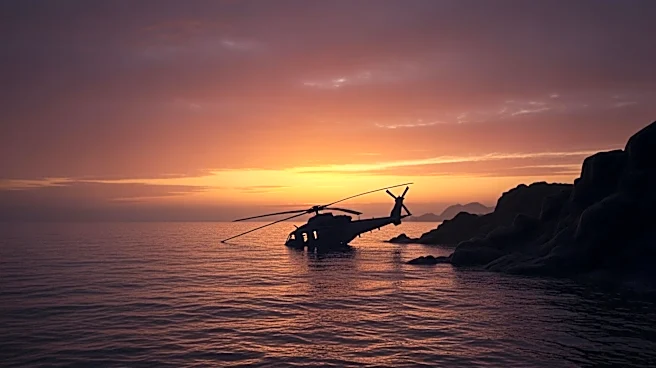
A U.S. Army Apache attack helicopter was shot down by Iranian forces in the Strait of Hormuz, leading to a high-stakes rescue mission executed by a drone boat. This incident marks the first known instance of an unmanned vessel completing a rescue at sea.
The helicopter went down off the coast of Oman, reportedly due to Iranian action. U.S. Naval Forces Central Command, alongside the 82nd Airborne, the U.S. Air Force, and U.S. 5th Fleet Task Force 59, launched a rescue operation. The rescue was completed within about two hours using a Saronic Corsair 24-foot unmanned patrol boat. The two airmen were safely rescued and are reportedly in stable condition. Iran has denied deliberately targeting the helicopter, but warned that foreign assets operating near its territory are at risk.
Why It's Important?
This incident occurs at a sensitive time for U.S.-Iran relations, as President Trump had predicted a ceasefire agreement with Iran just hours before the shootdown. The U.S. military has been restrained in its responses to Iranian provocations, aiming to preserve peace talks. However, this event has prompted President Trump to initiate counterstrikes, highlighting the fragile nature of the ceasefire and the potential for escalation. The use of unmanned vessels in the rescue operation demonstrates the growing role of technology in military operations, potentially influencing future military strategies and procurement decisions.
What's Next?
Following the incident, President Trump has indicated that a strong U.S. response is necessary, leading to airstrikes on Iranian targets. The precision strikes targeted Iranian air defense and surveillance sites, aiming for a proportional response. The situation remains tense, with potential implications for ongoing diplomatic efforts and regional stability. The involvement of Task Force 59 in the rescue operation underscores the increasing importance of unmanned systems in military operations, which may lead to further investment and development in this area.
Beyond the Headlines
The use of unmanned surface vessels (USVs) in the rescue operation highlights a significant shift in military tactics, emphasizing the role of technology in reducing risks to human life. This development could accelerate the adoption of USVs for similar missions, potentially transforming naval operations. Additionally, the incident underscores the complexities of U.S.-Iran relations, where military actions and diplomatic efforts are closely intertwined, affecting regional and global security dynamics.