
What's Happening?
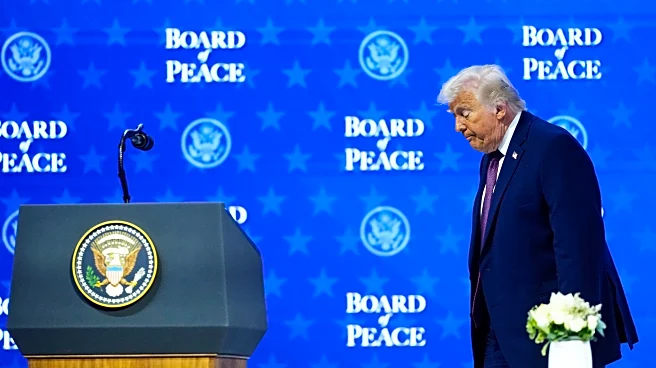
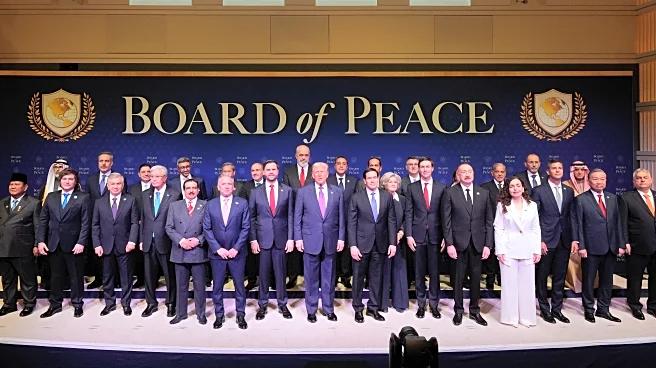
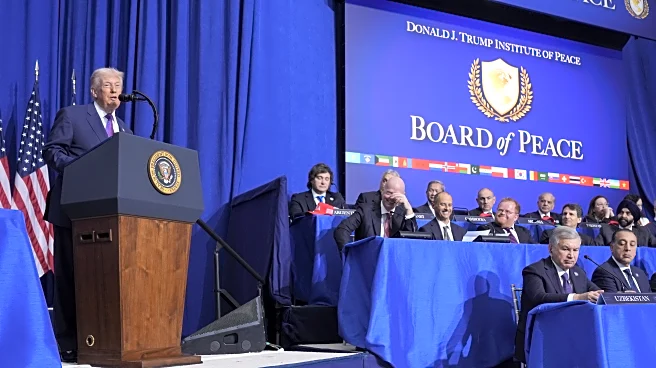
Turkey has announced its commitment to contribute troops to the International Stabilization Force (ISF) in Gaza. This announcement was made by Turkish Foreign Minister Hakan Fidan during the inaugural Board of Peace meeting held in Washington, DC. Alongside
Turkey, five other countries—Indonesia, Morocco, Kazakhstan, Kosovo, and Albania—have also pledged to send troops to the ISF. The force's commander, Maj.-Gen. Jasper Jeffers, confirmed these commitments. Indonesia is set to contribute 8,000 or more troops, while Kazakhstan will deploy military units, including medical teams. Additionally, Egypt and Jordan have committed to training police forces in the region. The meeting also saw significant financial pledges, with the United Arab Emirates, Saudi Arabia, and Kuwait collectively pledging $3.2 billion to support Gaza through the Board of Peace.
Why It's Important?
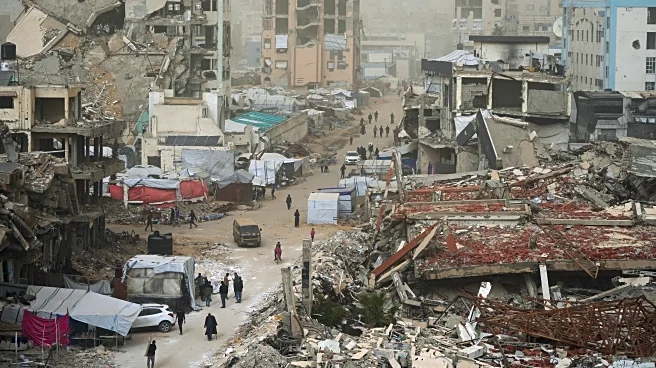
The commitment of troops and financial support to Gaza's International Stabilization Force is a significant development in international efforts to stabilize the region. The involvement of multiple countries highlights a collaborative approach to addressing security and humanitarian challenges in Gaza. The financial pledges from the UAE, Saudi Arabia, and Kuwait, along with the troop contributions, underscore a regional commitment to peace and stability. This initiative could potentially lead to improved security conditions and support for rebuilding efforts in Gaza, impacting the lives of many residents. The international community's involvement also reflects broader geopolitical interests in maintaining stability in the Middle East.
What's Next?
The deployment of troops and the establishment of a transitional police force in Gaza are expected to proceed following these commitments. The international community will likely monitor the situation closely to ensure the effective implementation of these initiatives. The success of the ISF and the transitional police force could serve as a model for future peacekeeping efforts in other conflict zones. Additionally, the financial support pledged will need to be managed and allocated effectively to ensure it reaches the intended projects and initiatives in Gaza.