




What's Happening?
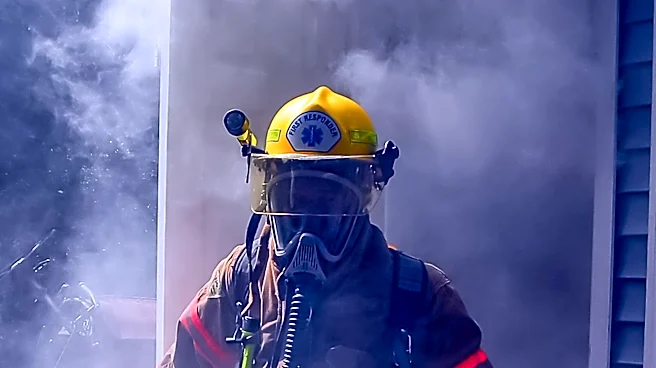
The Norton Fire Department in Southwest Virginia is addressing a decline in volunteer firefighters by integrating city employees into its ranks. Almost one-third of the department's roster consists of municipal workers who also serve as volunteer firefighters.
This unique model allows these city employees to leave their regular jobs during work hours to respond to fire calls, with their firefighting duties counting as part of their paid workweek. Fire Chief Todd Lagow credits this collaboration with the municipal government for maintaining staffing levels, as the department would otherwise face significant challenges. The department, which is volunteer-run except for Lagow's paid position, responds to approximately 350 calls annually and has seen its Insurance Services Office (ISO) rating improve from a five to a three, indicating enhanced public safety capabilities.
Why It's Important?
This innovative approach in Norton offers a potential solution to the nationwide decline in volunteer firefighters, a trend that has seen a drop of over 220,000 volunteers since 1984. The reliance on municipal employees ensures that the department has sufficient personnel available during daytime hours, a critical period when many traditional volunteers are at their primary jobs outside the community. This model not only bolsters emergency response capabilities but also fosters a stronger sense of civic duty among city workers. The improved ISO rating can lead to lower insurance premiums for residents and businesses, demonstrating a tangible economic benefit. For other small, rural communities facing similar volunteer shortages, Norton's strategy could serve as a viable blueprint for maintaining essential public safety services.
What's Next?
The Norton Fire Department plans to continue its current model, which has proven effective in maintaining staffing and improving its service rating. Other communities, particularly unincorporated areas like Stickleyville in Lee County, may explore adapting similar strategies, though they face challenges due to the absence of a municipal government to draw from. The success of Norton's approach may encourage broader discussions among state agencies and fire service stakeholders about formalizing such collaborations or developing incentives for municipal employees to volunteer. Continued advocacy for funding and transparent communication between fire departments and local governments will be crucial for sustaining and expanding these efforts, potentially leading to more resilient emergency services across the U.S.
Beyond the Headlines
The Norton Fire Department's model highlights a broader societal shift away from traditional volunteerism and the increasing need for creative solutions in public service. While effective, the dual-role system also presents challenges, particularly during citywide emergencies where individuals might need to fulfill multiple critical roles simultaneously. This raises questions about the long-term sustainability and scalability of such models, especially in larger or more complex urban environments. The success in Norton underscores the importance of strong community ties and proactive leadership in addressing critical public safety needs. It also implicitly calls for a re-evaluation of how volunteer services are supported and integrated into modern municipal structures, potentially inspiring new policies that recognize and reward civic engagement more formally.