
What's Happening?
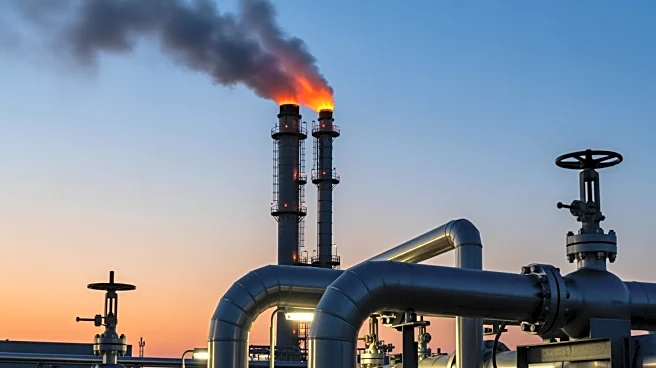
Nigeria has granted permits to 28 companies to capture and commercialize gas that is currently being flared by the oil industry. This initiative is part of the Nigerian Gas Flare Commercialisation Programme
(NGFCP), which aims to reduce emissions and generate revenue from gas that was previously wasted. According to Gbenga Komolafe, head of the Nigerian Upstream Petroleum Regulatory Commission (NUPRC), 42 bids were submitted to harvest gas at 49 sites in the Niger Delta, with 14 applicants still needing to meet permit requirements. The program is expected to capture and commercialize between 250 and 300 million standard cubic feet of gas. Historically, Nigeria, Africa's largest crude oil producer, has flared much of its gas due to the lack of commercial viability. The government is now incentivizing the industry to capture and sell this gas, aligning with its broader plan to achieve net-zero emissions by 2060.
Why It's Important?
The initiative is significant as it addresses both environmental and economic challenges. By reducing gas flaring, Nigeria aims to cut approximately six million tons of carbon dioxide emissions annually, contributing to global efforts to combat climate change. Economically, the program is expected to attract up to $2 billion in investment and create over 100,000 direct and indirect jobs. This could enhance Nigeria's energy sector by supporting nearly three gigawatts of potential electricity generation. The move also positions Nigeria as a leader in sustainable energy practices in Africa, potentially influencing other oil-producing nations to adopt similar measures.
What's Next?
The successful implementation of the NGFCP could lead to further regulatory and policy developments in Nigeria's energy sector. As the program progresses, it may attract more international investment and partnerships, enhancing Nigeria's role in the global energy market. Additionally, the reduction in gas flaring could improve local air quality and health outcomes, fostering greater community support for the oil industry. The initiative's success could also prompt the Nigerian government to explore additional environmental and economic reforms.