



What's Happening?
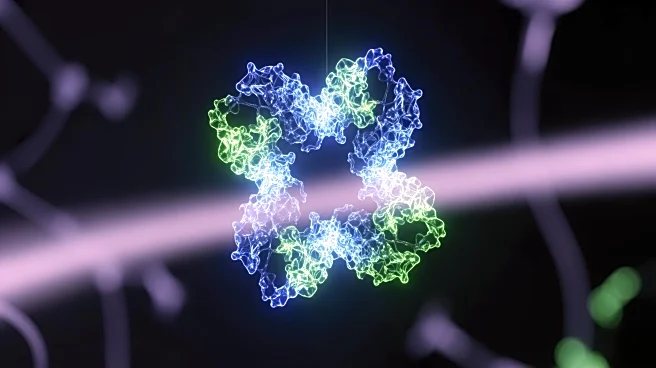
A research team at the University of California, Irvine, led by Professor John Chaput, has developed a novel enzyme, C28, that significantly advances RNA synthesis technology. This engineered polymerase enzyme can synthesize RNA with high efficiency and
accuracy, overcoming previous limitations in RNA production. The enzyme was created using directed evolution, a method that mimics natural selection to produce molecular machines with tailored properties. C28 can generate RNA at speeds comparable to natural systems and is capable of reverse transcription, making it a versatile tool for biotechnological applications, including mRNA vaccine production and synthetic biology.
Why It's Important?
The development of the C28 enzyme represents a major leap forward in molecular biotechnology, particularly in the fields of RNA research and therapeutic development. Its ability to synthesize RNA efficiently and accept chemically modified nucleotides enhances its utility in pharmaceutical manufacturing, potentially reducing costs and improving the stability and functionality of RNA-based therapeutics. This breakthrough could accelerate the development of next-generation vaccines and diagnostics, contributing to public health advancements. The enzyme's versatility also opens new avenues for research in synthetic biology and personalized medicine.
Beyond the Headlines
The creation of C28 underscores the power of directed evolution as a tool to transcend biological limitations and discover novel molecular functionalities. This approach highlights the adaptability of enzyme structures and the potential for non-intuitive evolutionary pathways to yield significant scientific advancements. The research also demonstrates the importance of interdisciplinary collaboration and sustained investment in fundamental biomedical research, as supported by the U.S. National Science Foundation.