






What's Happening?
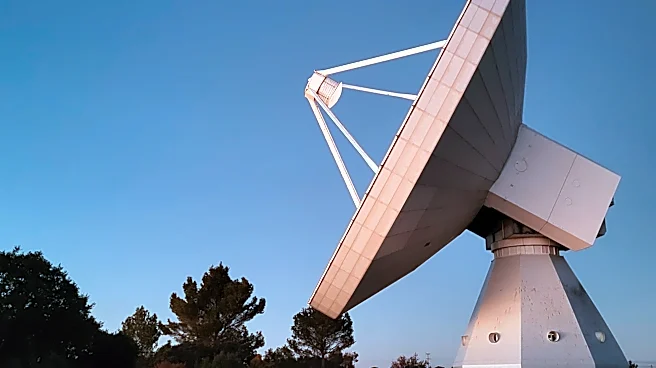
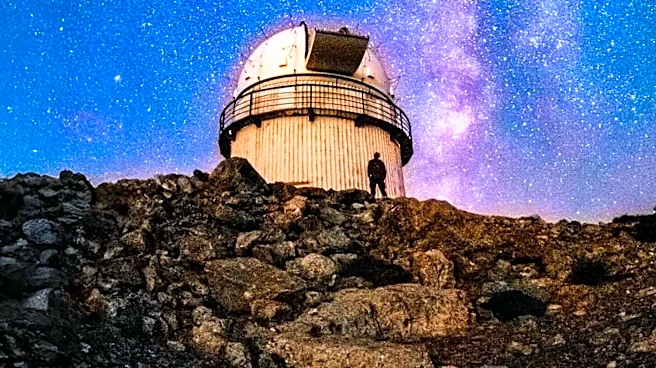
Astronomers have identified a type of sugar, erythrulose, in the interstellar medium, which consists of thin clouds of gas and dust between stars. This discovery was made using two radio telescopes in Spain, which collected data from a large gas cloud near
the center of the Milky Way. The sugar was identified in gas form by comparing telescope signals to laboratory samples. This finding adds to the growing list of complex organic molecules detected in space, including building blocks for genetic material and components of cells. The results were published in the journal Nature Astronomy, highlighting the potential for these sugars to play a role in the origins of life.
Why It's Important?
The discovery of erythrulose in space is significant because it supports the theory that the building blocks of life could be widespread across the galaxy. Sugars are essential for life as they are involved in cellular processes and the formation of DNA. The presence of such complex molecules in space suggests that the ingredients necessary for life could be present in other regions of the galaxy, potentially allowing life to develop elsewhere. This finding also contributes to the understanding of how life might have originated on Earth, whether through delivery by comets or space rocks, or from components already present in the solar system.
What's Next?
Researchers plan to continue searching for more sugars and other organic molecules in space to understand how they convert to different forms and contribute to the development of life. This ongoing research could provide further evidence of life's potential beyond Earth and help scientists understand the processes that lead to the formation of life-supporting environments. The study of these molecules in different regions of the galaxy could also reveal more about the distribution of life's building blocks across the universe.
Beyond the Headlines
The detection of complex sugars like erythrulose in space raises questions about the ethical and philosophical implications of discovering life beyond Earth. It challenges the understanding of life's uniqueness and prompts discussions about humanity's place in the universe. Additionally, this discovery could influence future space exploration missions, as scientists may prioritize regions with high concentrations of organic molecules for further study.