






What's Happening?
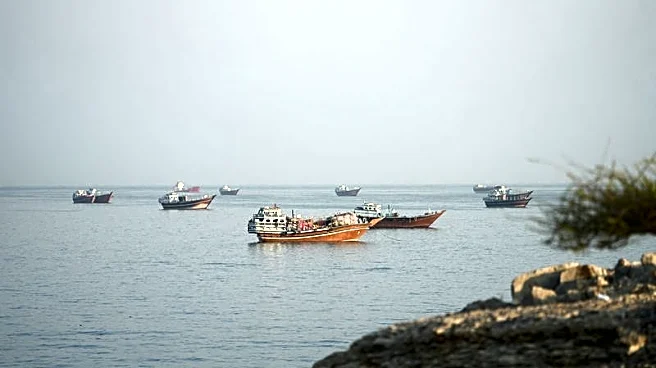
Iran has exhausted its offshore crude oil stockpiles, which had previously sustained its oil sales despite U.S. naval pressure. According to analysts at commodities-data company Kpler, as reported by The Wall Street Journal, Iranian oil stored on tankers
in Asian waters was depleted by mid-October. These floating cargoes had allowed Iran to continue supplying Chinese refineries when the U.S. blockade prevented new shipments from reaching overseas customers. The accessible floating stockpile decreased significantly from approximately 90 million barrels in mid-July to about 29 million barrels. This depletion removes a crucial financial buffer for Tehran as it faces increasing economic pressures.
Why It's Important?
The depletion of Iran's offshore oil stockpiles marks a significant escalation in the effectiveness of U.S. sanctions and naval blockades against the country. This development directly impacts Iran's ability to generate revenue from oil exports, which is vital for its economy. For the U.S., it signifies a successful application of economic pressure, potentially limiting Iran's financial resources for various activities. The reliance on these offshore reserves highlights the challenges Iran faces in circumventing international sanctions. The long-term impact could include further economic strain on Iran, potentially influencing its geopolitical actions and negotiations with international powers. This situation also underscores the complexities of global oil trade and the use of financial and naval power to enforce policy.
What's Next?
The immediate consequence for Iran is a likely reduction in its oil export revenues, with payments for previously delivered cargoes potentially drying up around mid-December. The U.S. Treasury continues to target entities assisting Iranian shadow-fleet operations, indicating ongoing efforts to tighten the blockade. While some petroleum products like liquefied petroleum gas and jet fuel have still moved, the crude oil situation is critical. The squeeze on Iranian exports coincides with other Middle Eastern producers increasing their shipments, which could further marginalize Iran's position in the global oil market. Future developments will depend on Iran's ability to find new ways to export crude or if international diplomatic efforts lead to a relaxation of sanctions.
Beyond the Headlines
The exhaustion of Iran's offshore oil stockpiles reveals the intricate and often clandestine methods employed to circumvent international sanctions. The 'shadow fleet' of tankers, falsified shipping documents, manipulated tracking signals, and irregular voyages described by the U.S. Treasury illustrate the sophisticated measures taken to obscure the origin of Iranian oil. This situation raises ethical and legal questions about the enforcement of sanctions and the role of various actors in facilitating or hindering such trade. It also highlights the broader implications for maritime security and the integrity of global shipping. The long-term impact could extend to the evolution of international sanctions regimes, potentially leading to more robust enforcement mechanisms or, conversely, to more innovative methods of evasion, shaping the future of economic warfare and international trade compliance.