



What's Happening?
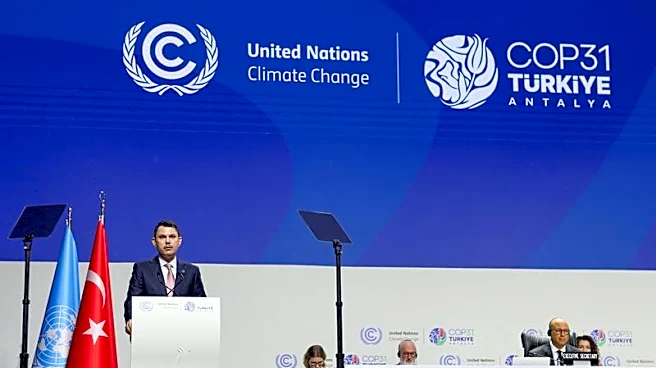
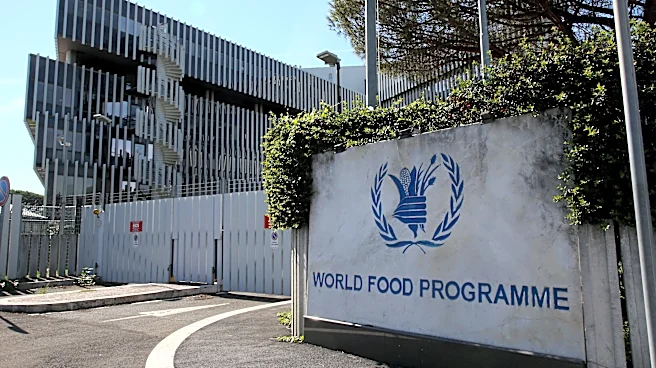
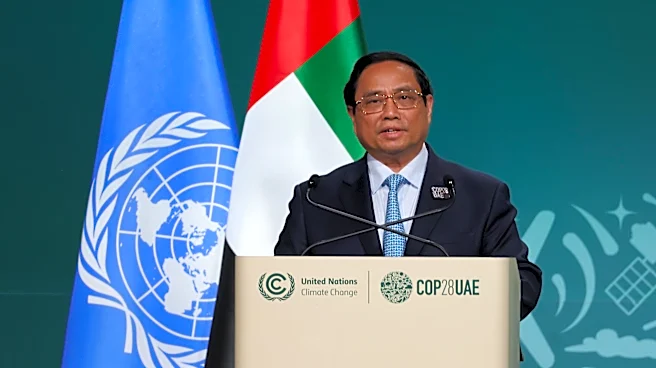
The United Nations World Food Programme (WFP) has issued a warning at COP31, stating that traditional humanitarian aid is insufficient to address the escalating crises caused by frequent extreme weather events and a strengthening El Niño. The WFP emphasizes
that communities lack adequate time to recover between these shocks. To counter this, the organization is advocating for sustained investment through innovative financial solutions. These solutions aim to prevent predictable weather-related hazards from developing into widespread hunger emergencies. The WFP projects that the current El Niño phenomenon could push an additional 49 million people into acute food insecurity by the end of 2027, with its peak intensity expected between October and December 2026. The impacts on planting seasons, harvests, and food prices could extend into early 2028. Regions already grappling with conflict and economic instability are particularly vulnerable to these climate shocks.
Why It's Important?
This call to action from the WFP highlights a critical shift in how global food security and climate change are being addressed. The emphasis on innovative climate finance underscores the recognition that reactive humanitarian aid is no longer sustainable in the face of increasingly frequent and severe weather events. For the U.S., this has implications for foreign policy, international aid budgets, and the potential for increased migration pressures from affected regions. The projected rise in acute food insecurity could destabilize vulnerable nations, potentially leading to humanitarian crises that require international intervention, including from the U.S. Furthermore, the interconnectedness of global food systems means that disruptions in one region can have ripple effects on international markets and supply chains, potentially impacting U.S. consumers and agricultural interests. Investing in preventative measures, as advocated by the WFP, could ultimately reduce the long-term costs associated with emergency response and foster greater global stability.
What's Next?
At COP31, the WFP is collaborating with other UN agencies to expand pre-arranged financing mechanisms and enhance cooperation. The goal is to reduce costs and maximize the impact of limited resources. The WFP is urging leaders at COP31 to scale up predictable, pre-arranged financing that can be deployed before forecasted hazards escalate into disasters. They also advocate for making finance more accessible to fragile, conflict-affected, and highly food-insecure countries. Additionally, the WFP calls for investment in nationally led early warning systems, anticipatory action, disaster risk management, and shock-responsive social protection systems. These discussions and potential agreements at COP31 will determine the future direction of international efforts to mitigate climate-induced food insecurity and could shape global climate finance policies.
Beyond the Headlines
The WFP's appeal for innovative climate finance points to a deeper systemic challenge: the inadequacy of current global governance and financial structures to address complex, interconnected crises like climate change and food insecurity. The reliance on anticipatory action and pre-arranged financing mechanisms represents a paradigm shift from reactive aid to proactive risk management. This approach not only aims to save lives and livelihoods but also to build resilience in vulnerable communities. The ethical implications of inaction are profound, as millions face starvation due to events largely driven by global climate patterns. Legally, discussions at COP31 could lead to new international agreements or frameworks for climate finance, potentially re-evaluating the responsibilities of developed nations in supporting climate adaptation and mitigation efforts in developing countries. Culturally, the increasing frequency of climate-induced disasters may necessitate a global re-evaluation of consumption patterns and environmental stewardship.