
What's Happening?
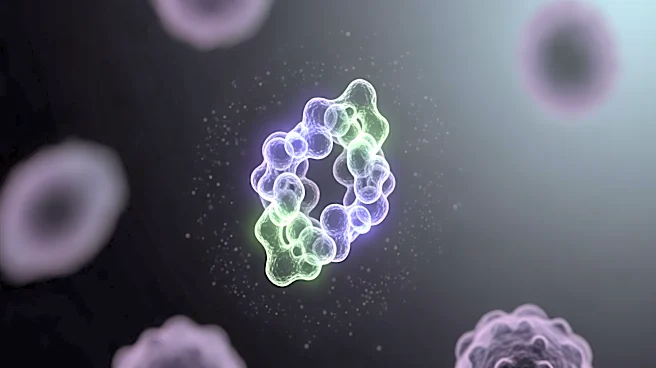
Researchers at Tufts University and the Wyss Institute have advanced the development of xenobots by integrating nerve cells, creating 'neurobots' with self-organizing nervous systems. Originally developed
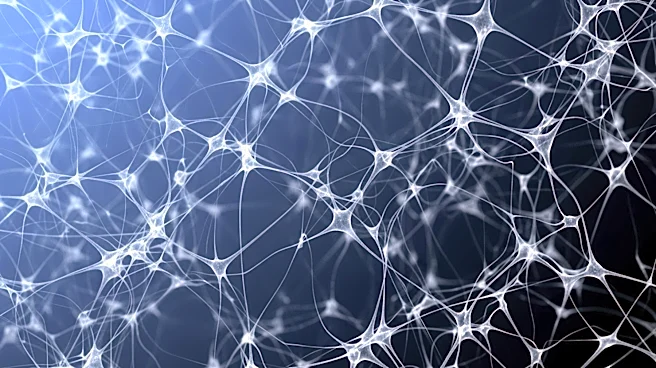
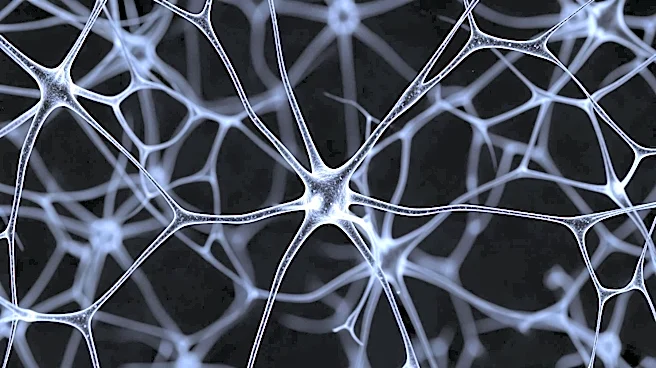
in 2020, xenobots are tiny living structures made from frog cells that can move, repair themselves, and form new structures. The new neurobots, detailed in Advanced Science, exhibit enhanced behaviors and complex movement patterns due to the addition of neurons. This research, led by Michael Levin and Haleh Fotowat, aims to understand how cells organize into complex structures, potentially aiding synthetic biology and regenerative medicine. The neurobots are created by inserting neural precursor cells into biobots, which then develop into neurons, forming simple neural networks that influence movement.
Why It's Important?
The development of neurobots represents a significant step in understanding the formation and function of nervous systems. This research could lead to breakthroughs in synthetic biology, offering insights into how biological structures can be engineered or repaired. The ability of neurobots to self-organize and exhibit complex behaviors without evolutionary history provides a unique model for studying neural development. This could have implications for regenerative medicine, potentially leading to new methods for repairing damaged tissues or designing biological systems. The study also highlights the potential for these living machines to adapt and develop new functions, such as responding to light, which could expand their applications in various fields.
What's Next?
Future research will focus on exploring the genetic activity observed in neurobots, particularly the activation of genes related to visual processing. Scientists are investigating whether neurobots could develop photoreceptors, allowing them to respond to light. This line of inquiry could lead to the creation of more complex living machines with enhanced capabilities. Additionally, researchers aim to further understand the basic principles of neural organization and behavior, which could inform the design of new biological systems and improve regenerative medicine techniques. The study's findings may also prompt further exploration into the ethical and practical implications of creating living machines with nervous systems.