
What's Happening?
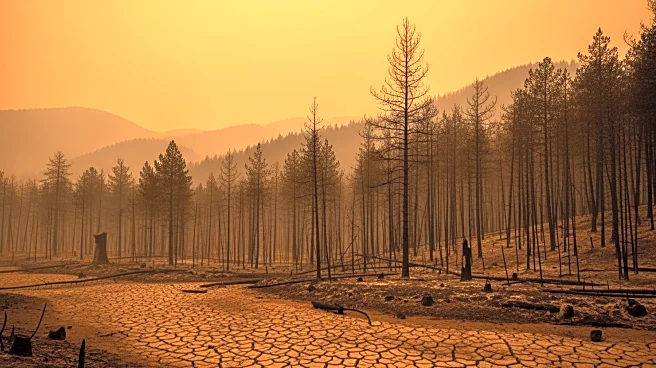
Chilean President Gabriel Boric has declared a state of catastrophe in the Ñuble and Biobío regions due to severe wildfires that have resulted in at least 18 deaths. The fires have destroyed approximately
250 homes and forced the evacuation of over 50,000 people. The declaration allows for the deployment of Chile's armed forces to assist in firefighting efforts. The fires, exacerbated by strong winds and high temperatures, have burned through 8,500 hectares, posing significant challenges to containment efforts.
Why It's Important?
The wildfires in Chile highlight the increasing frequency and intensity of natural disasters linked to climate change. The declaration of a state of catastrophe underscores the severity of the situation and the need for immediate and coordinated response efforts. The impact on local communities is profound, with significant loss of life, property, and environmental damage. This situation also raises questions about preparedness and resilience in the face of climate-related disasters, both in Chile and globally.
What's Next?
Efforts to control the wildfires will continue, with additional resources and personnel likely to be deployed. The Chilean government may seek international assistance if the situation worsens. In the longer term, there may be increased focus on developing strategies to mitigate the impact of such disasters, including improved fire management practices and infrastructure resilience. The fires could also prompt discussions on climate policy and the need for global cooperation to address the root causes of climate change.