

What's Happening?
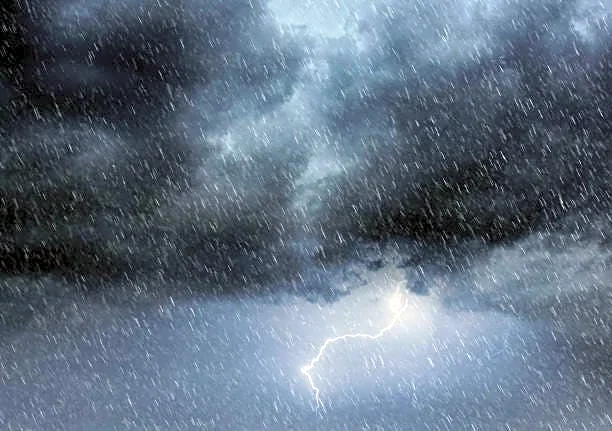
New Mexico is preparing for a period of widespread monsoon storms, bringing significant rainfall and cooler temperatures across the state. Meteorologist Carter Greulich of the National Weather Service in Albuquerque indicated that a plume of monsoon moisture
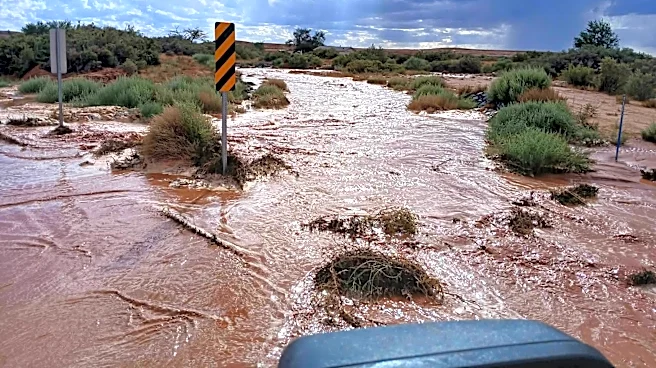
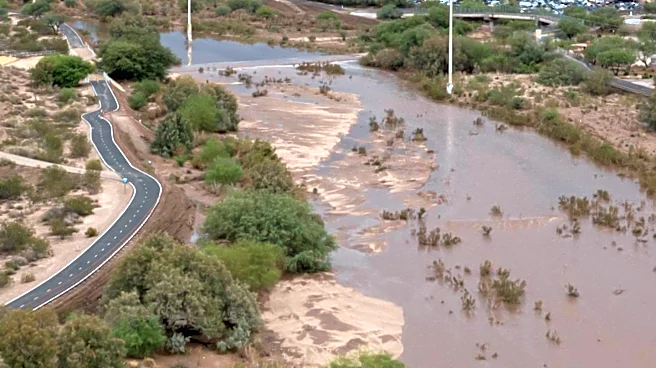
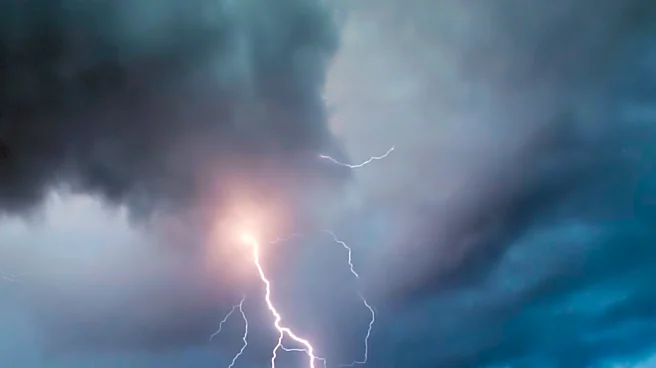
is moving through the region, leading to unusually high rainfall for this time of year. The primary concern is scattered to numerous thunderstorms capable of producing substantial rain in short durations, which could result in isolated flash flooding. Wednesday is anticipated to be the rainiest day, with Albuquerque and southern New Mexico expecting precipitation late in the day. While the rain is not expected to alleviate the long-term drought, it offers short-term benefits for vegetation and wildfire prevention. Temperatures are projected to be considerably cooler, ranging from the high 60s to low 70s in Albuquerque, a notable change from the heat advisories issued in August.
Why It's Important?
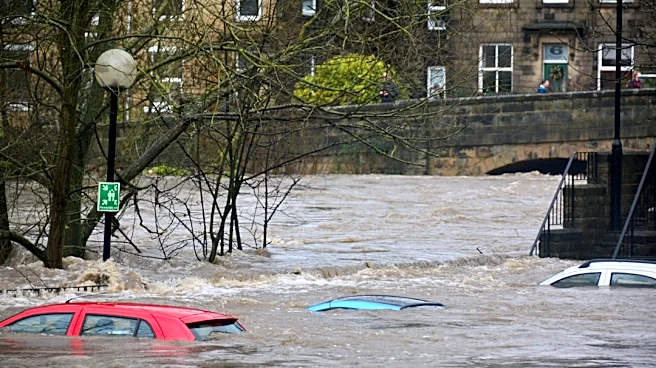
The impending monsoon storms carry significant implications for public safety and infrastructure in New Mexico. The risk of flash flooding, particularly in urban areas, arroyos, and burn scars, poses a direct threat to residents and property. Meteorologists are urging caution, advising individuals to avoid driving through flooded roadways due to the unpredictable depth of the water. Areas with burn scars, such as Ruidoso, are especially vulnerable to flash flooding. While the rainfall provides a temporary reprieve from the dry conditions and aids vegetation, it underscores the ongoing challenge of water management in a drought-prone region. The cooler temperatures offer immediate relief from the recent heatwaves, impacting daily life and energy consumption patterns across the state.
What's Next?
Residents across New Mexico should anticipate continued scattered rainfall through the remainder of the week, with a 60% to 70% chance of rain showers in Albuquerque and other parts of the state over the weekend. The National Weather Service will likely continue to issue advisories and warnings regarding flash flood risks, especially for areas near arroyos and burn scars. Local authorities will need to monitor water levels and road conditions closely to ensure public safety. While the immediate focus is on managing the storm's impact, the long-term implications for water conservation and drought mitigation will remain a critical concern for state and local agencies, even as this monsoon event provides some short-term benefits.
Beyond the Headlines
The recurring nature of monsoon seasons in the Western U.S., and specifically in New Mexico, highlights the broader challenges of climate variability and its impact on arid regions. While these storms bring much-needed moisture, the intensity and localized nature of the rainfall often lead to flash flooding rather than widespread, sustained water replenishment for drought-stricken areas. This situation underscores the need for robust urban planning that accounts for rapid water runoff and effective land management strategies, particularly in areas affected by wildfires, where burn scars exacerbate flood risks. The balance between managing immediate hazards and addressing long-term water security remains a complex and critical issue for the region.