




What's Happening?
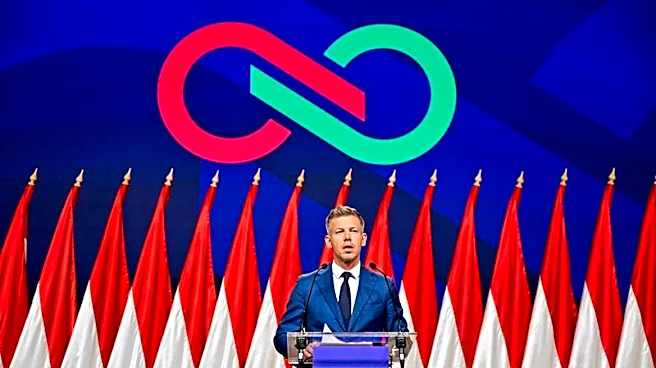
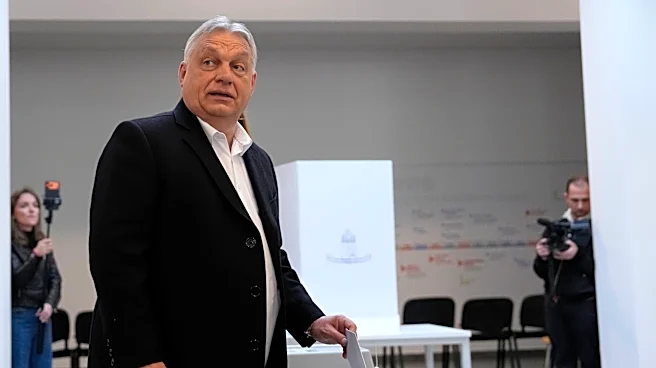
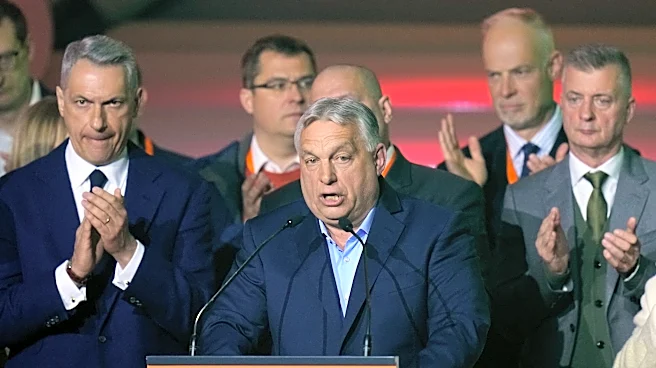
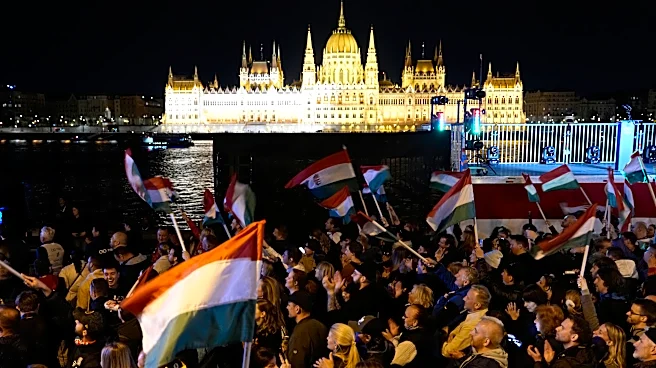
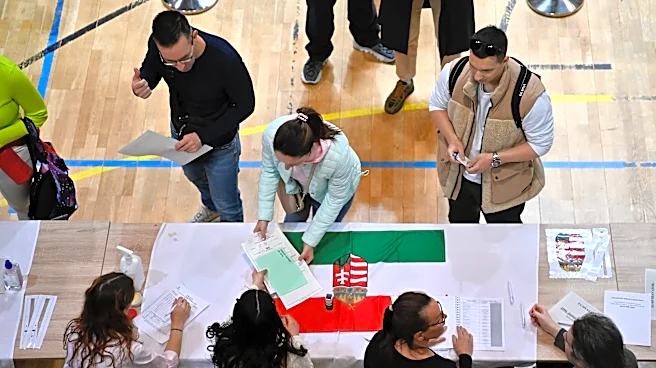
Peter Magyar has emerged victorious in Hungary's general election, defeating long-standing Prime Minister Viktor Orban. Magyar, who previously served as an ally to Orban, is set to take over as prime minister by May 5. He has pledged to restore the rule
of law, overhaul government structures, and create new ministries to address issues such as public health, environmental protection, and education. Magyar's Tisza party secured a super-majority, allowing it to embark on ambitious reforms. The election marks a significant shift in Hungary's political landscape, with Magyar aiming to tackle corruption and improve relations with the European Union.
Why It's Important?
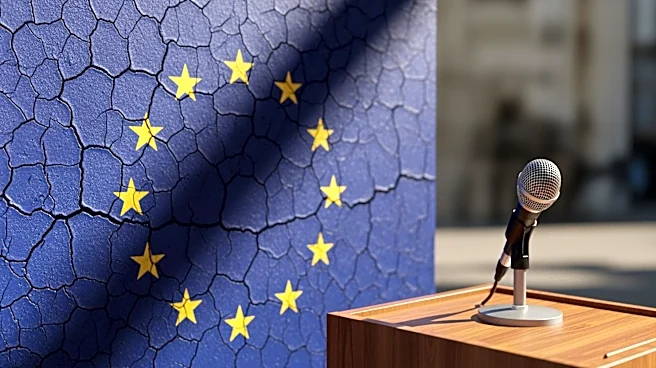
The election results signify a departure from Orban's long-standing dominance and could lead to significant changes in Hungary's political and economic policies. Magyar's victory is expected to improve Hungary's relations with the European Union, potentially unlocking billions of euros in EU funding that were frozen due to corruption and rule-of-law concerns under Orban. The new government may also reverse Orban's antagonistic approach to Ukraine and his obstruction of EU efforts to assist the war-ravaged country. These changes could have broader implications for Hungary's role within the EU and its economic recovery.
What's Next?
Magyar's government will face pressure from the EU to quickly implement reforms to access frozen funds needed for Hungary's economy. The new administration is expected to address corruption and introduce the euro by 2030. Additionally, Magyar's approach to Ukraine and Russia will be closely watched, as he aims to normalize political relations and support EU efforts against Russia's invasion of Ukraine. The coming months will be crucial for Magyar to deliver on his promises and navigate the challenges of transitioning from Orban's policies.
Beyond the Headlines
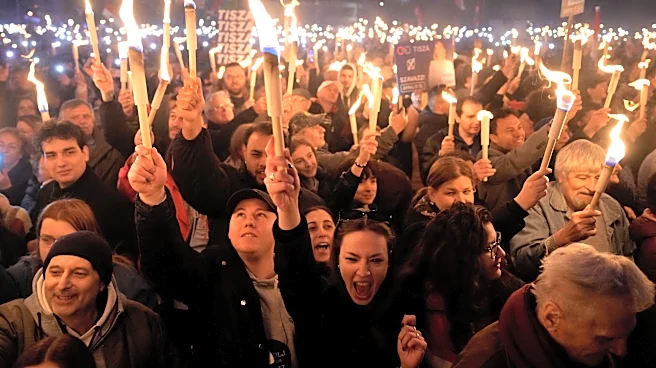
Magyar's victory could lead to a cultural shift in Hungary, as his government aims to undo legislation that allowed Orban to manipulate the electoral system and crack down on press freedom. The election has sparked hope among many Hungarians for a freer and more democratic society. However, there are concerns about the potential pitfalls of a super-majority, with some fearing that it could lead to an unfair government. The long-term impact of these changes on Hungary's democratic institutions and civil liberties remains to be seen.