


What's Happening?
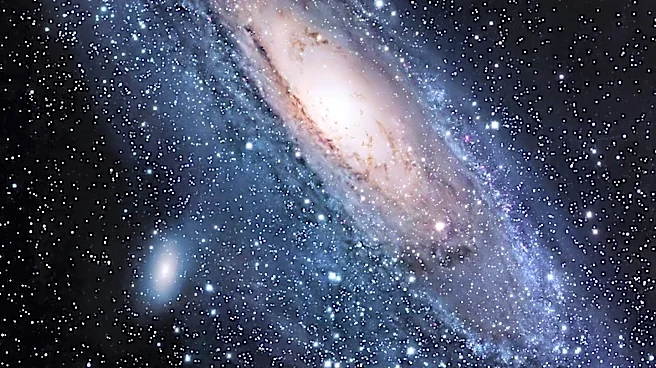
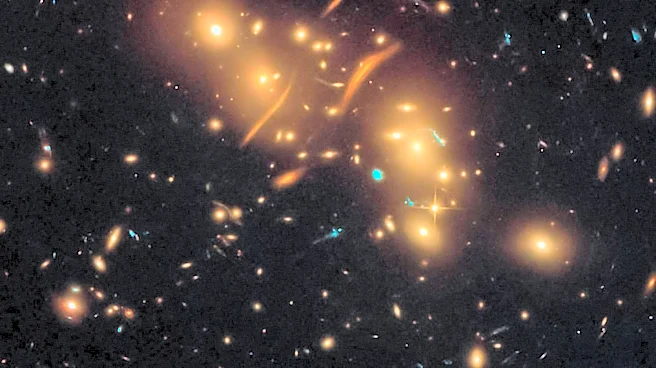
The NSF-DOE Vera C. Rubin Observatory's 3.2-gigapixel LSST camera has captured an image featuring over half a million galaxies. This camera, the largest digital camera in the world, is part of a decade-long mission to capture high-resolution images of the night
sky. The image focuses on the COSMOS field, a well-studied area of the sky, providing new data to track galactic changes over time.
Why It's Important?
The LSST Camera's unprecedented resolution offers new insights into the structure and evolution of galaxies. By repeatedly imaging the COSMOS field, scientists can study changes in deep-space objects, contributing to our understanding of the universe. This project represents a significant advancement in astronomical research, with potential implications for cosmology and astrophysics.
What's Next?
The LSST Camera will continue its mission, capturing 700 high-resolution images each night. This ongoing data collection will support a wide range of scientific studies, from tracking transient astronomical events to mapping the distribution of dark matter. The project's findings could lead to breakthroughs in our understanding of the universe's history and future.
Beyond the Headlines
The LSST Camera's capabilities highlight the importance of technological innovation in expanding our knowledge of the cosmos. The data collected will not only enhance scientific research but also inspire public interest in astronomy and space exploration.